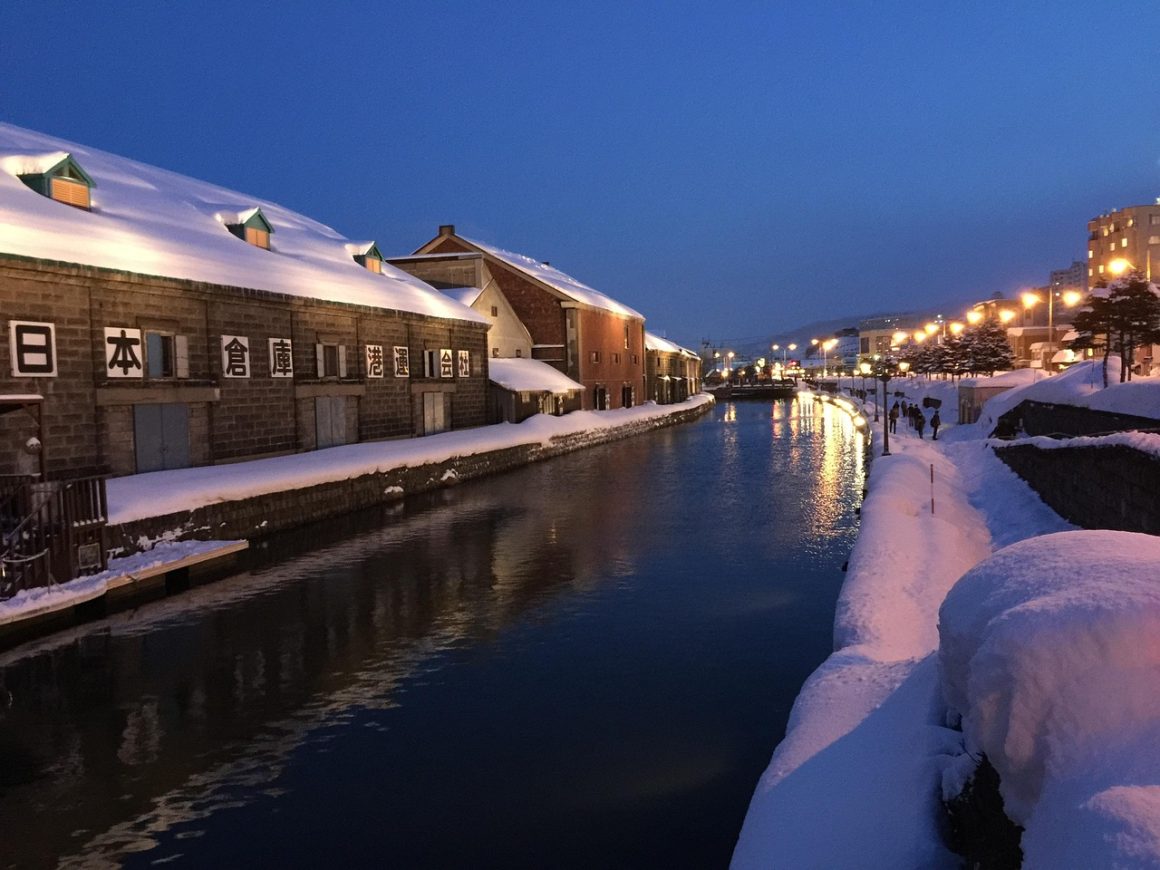
Stone warehouses, grand bank buildings and old railway tracks reveal how Otaru grew from a northern port into a centre of trade, finance and industry. Here are a few landmarks to add to your Otaru itinerary.
Start at Otaru Canal
The canal’s stone warehouses reflect Otaru’s role as a busy cargo port. Built close to the water, they once stored goods brought through the harbour and now form one of the city’s most recognisable historic streetscapes.
Explore the Former Bank District
The area around Ironai Street was once known as the “Wall Street of the North”, with banks competing for space in Otaru’s commercial centre. The former Bank of Japan Otaru Branch, completed in 1912, is notable for its Renaissance-inspired design and distinctive domed roof.
See the Former Mitsui Bank
Completed in 1927, the former Mitsui Bank Otaru Branch combines a stone exterior with decorative plasterwork and marble features inside. Its preserved interior, now a part of the Otaru Art Base, shows the importance attached to impressive commercial buildings during Otaru’s trading era. The district is also convenient for visitors choosing to stay in 5-star hotels in Hokkaido, Japan, with several central areas within quick reach.
Follow the Old Railway
The former Temiya Line was part of the first railway in Hokkaido, the government-operated Horonai Railway, opened between Temiya and Sapporo in 1880. Today, its preserved tracks create a 1.6-kilometre walking route through central Otaru.
Look Towards the Harbour
The waterfront still shows how closely Otaru developed around maritime trade. Hotels like Grand Park Otaru sits beside the harbour, located a short drive away from historic commercial buildings and warehouses that reflect the area’s connection with shipping.
Notice the Smaller Details
Look for stone façades, decorative columns, old lettering and preserved railway features as you walk. These details can reveal how individual buildings were used and help bring Otaru’s commercial past into focus.