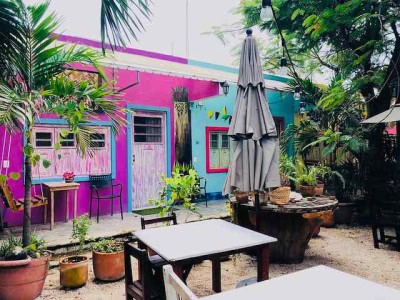
A few years back, I was in Tulum with a couple of mates from uni days. We last saw each other in the 90s.
Technicolour Tulum
Leen lives in Canada, Tessa in the USA, and I live in Norway, and when we planned our little reunion, we originally thought California. It was going to be at the end of October; apparently there’s loads of fun stuff going on in the Sunshine State at that time of year. And celebrating my Halloween birthday on board a spooky Queen Mary sounded like a cool experience.
But then, out of the blue, Tessa suggested Tulum!
Hm… I was in Yucatan once. Like, a million years ago. But not in Tulum. Time to do a bit of reading.
Pristine beaches, ancient Mayan ruins, bohemian-chic vibe, said the blogs and guidebooks. Once a quiet little fishing village on Mexico’s Riviera Maya, now a fave holiday spot. Boutique hotels, eco resorts and beachfront restaurants, all with a front-row seat to all the stunning stuff. Chic clubs where you can lounge around in a cabana. But… it has still managed to retain a laid-back kinda charm, I read. Want adventure, culture and relaxation? Then, Tulum is your 3-in-1 KinderEgg. Words to that effect.
This may be the place
It was an easy sell.
Here are a little something I scribbled the last morning in Tulum (but forgot to publish apparently), on the little beach outside our fab accoms, a perfect place for sitting on a swing and meditate in the early hours (thank you, jetlag!)
Tulum
I’m up before the sun. All I hear is the sound of waves lapping on the shore and palm trees rustling. It’s a gentle breeze, and the air smells faintly of salt, earth – and… is that pot? A nearby shop is rumoured to deal. Somewhere nearby, a motorbike hums to life before fading into the distance.
They feel timeless, mornings here, though strangely, the layers of time are more visible along this coast than almost anywhere else I’ve been.
The beaches: sun, sand, and serenity
We’re here for the legendary beaches, of course: soft sand along crystal-clear Caribbean waters, and a very relaxed vibe.
But you know me. However soft the sand and blue the ocean, hanging about a beach quickly bores me. So what else is on offer? I’m glad you asked.
Ancient Tulum
You can’t be in Tulum without visiting the last Mayan city, and the only one facing the Caribbean. These ruins above the ocean feel less like a distant relic and more like a place still chatting with the present.
I wander amongst the ruins of this once prosperous city, part trading port, part spiritual gateway, and entirely shaped by sun, sea and sky. El Castillo guided canoes safely through the reef. Temples with ancient carvings hint at their respect for nature; all about renewal and cosmic order. It makes sense!
And there’s cute wildlife.
Weirdly, Tulum feels more alive than the vast ancient cities in the interior, like Chichén Itzá and Teotihuacan. We’re closer to the elements here. The connection between past and present is more noticeable.
In fact, Ancient Tulum deserves a post of its own. Coming up, promise!
Valladolid: colour and calm
A few days later, we head to Chichén Itzá and a nearby fabled cenote – Ik Kil. We drive through villages slowly waking, past roadside stalls, stray dogs stretching awake under the pink light of morning. The jungle is thick and green on either side of the road.
On the way, we stop briefly in Valladolid.
Locals sit in shaded plazas, taking it easy. On a small square, families gather on benches and vendors sell fruit and sweet pastries nearby. Church bells echo softly in the background. Children chase pigeons. I try to stop them and they listen – for about 10 seconds.
Pastel façades glow pink, yellow, and turquoise under the early afternoon sun. It’s an elegant city, yet down-to-earth. Very different from the energy of the coast. Beach culture trends don’t seem to apply here.
And I’m reminded that the Yucatán is not only about beaches and ruins. It’s lived-in, layered, and, well… human, settled long before tourists showed up.
Chichén Itzá: a journey back in time
Where Tulum kinda whispers, Chichén Itzá has no qualms taking up space. It’s as if ancient Maya confidence shouts through the veil of time.
The El Castillo of Chichén Itzá rises from the earth with geometric precision; shadows fall exactly where ancient astronomers intended. It’s huge and commanding. I was here as a teenager, and remember climbing the steep steps. Can’t do that anymore. Ever since an 80-year-old tumbled down and died.
The heat builds quickly, and cicadas buzz loudly in the trees. A guide explains ancient rituals. I step away from the crowd, and… silence.
More about Chichén Itzá here.
Cenotes: gateways to the hidden realm
Cenotes are sinkholes created when bedrock collapses, revealing the water underground. The Maya believed these pools were portals to the underworld.
Cenote Ik Kil
A few kilometres from Chichén Itzá is Ik Kil. Walking down the stone steps toward the open pool, I glance upward at vines hanging from the circular opening above. Sunlight falls directly into the deep green water. People laugh and dive in. The splashes echo through the cavern, creating a strangely theatrical feel. Yet even with the noise, it’s stunning. There’s something undeniably magical here, and I understand why cenotes were sacred to the Maya.
Cenote Dos Ojos
After Ik Kil, we want more cenotes, so the next day we head to Dos Ojos – a completely different experience. Hidden in dense jungle, wooden walkways guide us to water clear as glass, and shadowy underground passages where vertical beams of sunlight falls from above.
Each cenote has its own personality: secret, sacred, mystical. More on these two (and a cenote in a bar!) here.
Ahau and the living spirit of Tulum
Yesterday evening, our last in Tulum, we walked along the beach road –
Mystery all round here
– heading to Ahau Tulum, a large wooden sculpture that rises from the sand. It’s often called Ven a la Luz and is symbolic of Tulum itself: humans and nature intertwined. People gather around it at sunrise and sunset, cameras in hand.
Ahau means sun king in Mayan tradition, reminding us this coastline was once sacred grounds aligned with the movements of the heavens. The sun, the sea, and the cycles of nature were more than just background scenery; they were central to existence.
Tulum still has a bit of a spiritual reputation, and stories go around of travellers who arrive for a weekend and end up staying for months, or unexpected life changes sparked during a visit. Many believe the energy of the land encourages transformation. Myth or mindset? You tell me.
Cancún then and now
Travelling in the Yucatán this time reminds me of visiting Cancún in the 1980s, when development was new and it felt almost experimental: wide beaches, open horizons, just a few new hotels rising from the sand, tourism in its infancy, possibility everywhere. It was bright, hopeful, and surprisingly quiet.
Now in 2019, Cancún is transformed. Energetic, towering resorts, busy nightlife, polished infrastructure, a tourist destination fully realised.
Tulum seems like a different chapter altogether. And perhaps that’s why it feels compelling now, somewhere between past and future – quieter, searching for balance between growth and preservation, still holding onto its mystique.
Tulum bonus
On beaches in Tulum, you’ll see little enclosures:
Cuidado, nido de tortuga. Careful, turtle nest.
Every year, between June and October, 2 species of sea turtles, loggerheads and white turtle, come up on the beach to lay their eggs. And just like in Trinidad, after many years and travelling thousands of kilometres, the ones who survive, return to where they were born to repeat the process. We were too late in the year to see them.
PS Our fab accoms in Tulum was Piedra Escondida – hereby recommended. And no, nothing sponsored. Recs on me.
Tulum and beyond: experiences, places, moments is a post from Sophie’s World