I did not expect silence to be the loudest thing I encountered in Ghana.
This country welcomes you with warmth: sun on your shoulders, waves crashing playfully against the shore, salt in the air, music spilling from passing cars, laughter and life.
And then, a stillness that demands attention. At the coastal forts and castles, Ghana quietly asks you to remember. Stepping into Fort Prinzenstein, or Christiansborg Castle, you’re not just sightseeing. This is an emotional journey through layers of history that still shape the present.
To stand where such sad, dramatic history has unfolded, where countless lives were altered forever, in the discomfort of knowing that the beauty of the coastline once masked unimaginable cruelty… visiting these sites are less about travel and more about remembrance.
Fort Prinzenstein: A lonely witness by the sea
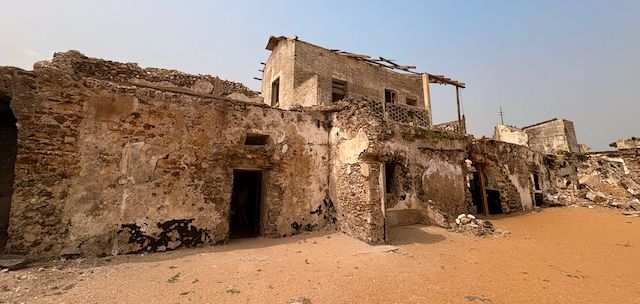
Fort Prinzenstein is at the edge of the Atlantic Ocean in Keta.
If you don’t know what you are looking for, you can easily miss it.
Today, the ocean laps close to its walls, as if time itself is slowly reclaiming the crumbling structure. Time, erosion, and the sea have already claimed parts of it, and standing here, I feel a sense of urgency, as if the stories it holds will disappear as well.
It is modest in size, Fort Prinzenstein – but immense in meaning. Learning that this hub of the transatlantic slave trade was built by the Danes in 1784, when my own country was still a part, however unwilling, of then Denmark – Norway, makes me queasy.
Walking through the fort, the silence is striking. This intimate, fragile structure somehow makes the brutal history hit harder.
The rooms are narrow and dark, with low ceilings that force you to bow your head as you move through them. It is impossible not to imagine the physical and emotional weight carried by those who were confined here – waiting, before being forced onto ships, not knowing where they would be taken, or if they would survive the journey ahead.
At one point, I pause in a cramped room where the air feels thick despite the open doorway. The heat lingers on my skin, and for a brief moment even breathing feels like effort. I imagine bodies packed tightly together, the smell of sweat. Of fear.
What strikes me most, is how exposed the fort feels. Unlike larger coastal forts fortified with imposing walls, Prinzenstein feels vulnerable, both to the elements and to memory.
The ocean
The ocean is right there – beautiful, endless, and cruelly indifferent. I can hear the waves breaking rhythmically against the shore. It is a steady, almost soothing sound. The contrast is unsettling. Standing on the shore, I’m very aware that this same sound once marked the final moments of familiarity, the last glimpse of home they would ever see.
There is no spectacle here, no attempt to soften the experience. The fort does not overwhelm you with displays or explanations. Instead, it invites stillness. It asks you to pause, to imagine, and to mourn. In that quiet, I feel a heaviness – a mix of anger, grief, responsibility, and deep respect for the resilience of those who passed through. Places like this are not meant to be comfortable. They are meant to be remembered, even as the sea slowly threatens to erase them.
Christiansborg Castle (Osu Castle): Power, politics, and pain
On the coast in Accra, Christiansborg Castle (also known as Osu Castle) tells a broader and more complex story. It has passed through many hands: Danish, Portuguese, British. Later, after Ghana’s independence, it became HQ of the new government.
Visiting Christiansborg is a very different experience from Fort Prinzenstein. This castle is immediately imposing. The whitewashed walls and sweeping views of the ocean seem almost serene at first glance. But as you move through the dungeons and holding cells, that calm dissolves. Slave traders designed these spaces for control: thick walls, minimal light, and an unmistakable sense of authority.
One detail that stays with me is learning that Queen Elizabeth II visited Ghana and stayed at Christiansborg for 11 days during her historic post-independence tour in 1961.
The image is striking: a queen sleeping within these walls, dining in candlelit halls, whilst directly beneath her feet lay the dungeons where enslaved people once were imprisoned. Royal banquets and formal receptions unfolding directly above rooms where enslaved Africans waited in darkness. The physical closeness of those vastly different histories is impossible to ignore.
The return
I walk down a narrow spiral staircase, and through a Door of No Return. My steps slow as the air shifts – warm above, cool and damp below. My legs feel heavy, my breath deliberate. I imagine how different this must have felt centuries ago, when hope was absent and the destination unknown.
Even more powerful is the path upward. At Christiansborg, people not only left through the Door of No Return – they also came back through it. Returned descendants, freed individuals, and later generations walked back into the castle, retracing steps once marked by despair. This upward movement reversed history, and quietly reclaimed space that once was used to dehumanise. Climbing up the same staircase from the dungeons into the light feels symbolic.
What makes Christiansborg striking is its complex history. This was not only a place of suffering during the slave trade, but also a centre of colonial administration and, later, national leadership. Again, the contrast is jarring – rooms where enslaved Africans were once held prisoner, near offices where political decisions were made centuries later. I’m reminded how power and oppression often have been closely intertwined.
The beach near Christiansborg Castle today
Thoughts on Ghana’s coastal forts and castles
Visiting Ghana’s coastal forts and castles is not easy, nor should it be. These places are reminders of resilience as much as they are of cruelty. They ask Ghanaians, members of the African diaspora, travellers from around the world – all of us – to pause, reflect, and acknowledge a shared history.
The contrast between modern-day Ghana and the painful stories embedded in these walls are poignant. If you are in Ghana, make time for these two sites. And go with respect and curiosity. Go ready to listen. Between the stone walls and the restless sea are stories that deserve to be remembered. Not only as distant history, but as part of our collective human journey.
Long after leaving Ghana, it is the sea I remember most. The same waters that once carried bodies away, now receive people who return – standing at the shoreline, breathing deeply, reclaiming their space. Constant, shimmering, and seemingly unchanged, it has witnessed centuries of departure and return. Waves that once carried ships of suffering, now lap against a coastline alive with music, movement, and possibility.
And standing at the water’s edge here, I’m reminded that just like the sea, memory endures. Restless, reflective, and impossible to ignore. The sea remembers what the world tries to forget. It has carried grief, stolen futures, and unspoken names across generations.
The ocean does not erase what happened, it holds it. So when the waves meet the shore, they are not just arriving – they are remembering.
Forts and Castles, Volta, Greater Accra, Central and Western Regions is a UNESCO World Heritage site.
Here are more UNESCO World Heritage sites we have visited around the world.
Between stone and sea: Ghana’s coastal slave forts is a post from Sophie’s World