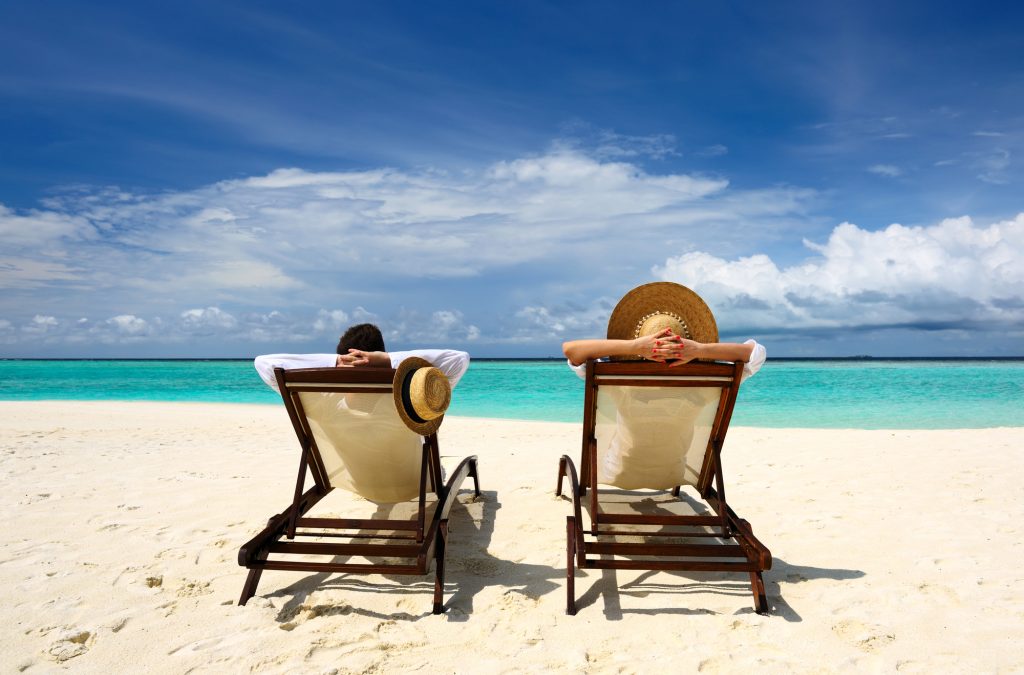
There is a particular kind of vacation that does not send you home rested. Your legs are sore, your shoes are filthy, there is sand somewhere it should not be, and your laundry smells faintly like ocean water, campfire smoke or glacier dust. You may even need a day off from your vacation.
And yet, these are often the trips you talk about for years. For us, the best adventure vacations have rarely been the ones where everything went perfectly or where relaxation was the primary objective. They are the trips where we paddled farther than expected, climbed higher than planned, got soaked, dusty, cold or ridiculously sweaty, then cleaned up just enough to share a great meal and relive the day together.
For adult travelers with demanding careers and enough disposable income to travel comfortably, that might sound counterintuitive. Why spend money and precious vacation days coming home tired? Because sometimes exhaustion is evidence that you actually went somewhere, did something and felt fully present while doing it.
Somewhere Along the Way, Vacation Became Synonymous With Rest
Photo Credit: Deposit Photos.
There is nothing wrong with spending a week beside a pool. We have happily done our share of lounging, lingering over cocktails and ordering another round because nobody needs to be anywhere. But relaxation and a memorable vacation are not necessarily the same thing.
Modern professional life requires a strange amount of sitting. We sit at desks, in meetings, in traffic and on airplanes. We stare at screens while answering emails about other emails. Then vacation arrives, and the traditional prescription is often to sit somewhere prettier.
Sometimes that is exactly what we need. Other times, what we really need is movement. We need to hike until the workweek disappears from our heads. We need to jump into cold water, balance on rocks, paddle into the wind, follow animal tracks or realize halfway up a mountain that the view is going to be worth every step.
The difference is not suffering for suffering’s sake. It is engagement. Adventure travel gives the brain something immediate to pay attention to, and that can be surprisingly restorative even when the body is tired.
The Dirt Usually Means You Were Somewhere Interesting
Photo Credit: Jenn Coleman.
There are vacations where your nicest shoes come home cleaner than when they left, and then there are the good ones. Some of our favorite travel memories have involved dirt in nearly every possible form: African dust after a long safari day, muddy trails, glacier grit, salt drying on our skin after getting out of the ocean and dust kicked up on backcountry roads in Alaska.
It is funny how quickly the things we avoid at home become badges of honor on vacation. Nobody returns from an incredible hike complaining that the trail ruined their socks, and nobody swims beside a whale shark and thinks the inconvenience was having wet hair afterward.
The mess becomes part of the story. That is one reason adventurous trips often linger in our memories longer than polished ones. There is texture to them. They smell, sting, ache and occasionally require scrubbing your shoes in a hotel bathtub.
You did not simply observe the destination. You got it on you, and that physical connection to a place can become one of the things you remember most vividly.
A Safari Can Wear You Out in the Best Possible Way
Photo Credit: Jenn Coleman.
Before our first safari in Tanzania, we understood intellectually that wildlife viewing involved long days. What we did not fully appreciate was how emotionally intense those days could become.
You wake before sunrise, climb into a safari vehicle and start scanning the landscape. Every bend might reveal elephants, lions, giraffes, cheetahs or something completely unexpected. Hours pass quickly because your attention is constantly switching between anticipation and amazement.
By evening, we were exhausted, but not in the way an endless workday can make you feel. We were almost overloaded with experience, trying to process everything we had seen while knowing another extraordinary day was waiting the following morning.
There is something deeply satisfying about returning to camp dusty after a day like that, washing off the Serengeti and sitting down to dinner while reliving the highlights. A safari is also a perfect example of how higher-end adventure travel has evolved. You can spend the day bouncing across dirt tracks and watching predators hunt, then return to a beautiful lodge, take a hot shower and eat an excellent meal.
Luxury and adventure are not opposites. Sometimes luxury simply makes it possible to recover well enough to do it all again tomorrow.
Swimming With Whale Sharks Changes the Definition of a Beach Vacation
Photo Credit: Jenn Coleman.
A tropical island can be a place to do absolutely nothing, or it can be the staging ground for one of the wildest mornings of your life. When we traveled to Mafia Island, Tanzania, the beaches and warm Indian Ocean were certainly beautiful, but the experience that defined the trip happened when we climbed into a boat, started scanning the water and eventually slipped overboard beside whale sharks.
Swimming next to an animal that large creates a strange mix of excitement and humility. Your brain understands that you are looking at a fish, but its size registers more like a moving landscape.
You swim harder than you expect, climb back into the boat dripping and breathless, and then someone spots another whale shark. Suddenly, the fatigue disappears and you are ready to jump right back in.
By the end, you are tired in a way no resort lounge chair can replicate, but that does not make the experience less luxurious. In our minds, it makes it more valuable. There will always be time later for a cocktail, and it tastes considerably better after you have spent the morning swimming through the Indian Ocean.
Alaska Rewards Travelers Who Keep Going
Photo Credit: Jenn Coleman.
Alaska has a way of exposing how small our usual definition of adventure can be. Drive beyond Anchorage and familiar travel infrastructure begins to thin. Keep going toward places like McCarthy, Wrangell-St. Elias or Kachemak Bay, and the country starts feeling bigger with every mile.
These are landscapes that practically demand participation. You can fly over glaciers, hike across ice, take boats into remote bays, paddle beneath mountains or follow a road until pavement feels like a distant memory.
Those days rarely end with pristine clothes. We have returned from Alaskan adventures windblown, dusty and completely spent, only to sit down over dinner and immediately start talking about what we wanted to do next.
That is the paradox of active travel. Physical fatigue can coexist with an almost ridiculous amount of mental energy. Your body says shower, while your brain is already planning tomorrow.
The Best Ski Days End With Heavy Legs
Photo Credit: Jenn Coleman.
Ski vacations are another perfect example because fresh tracks are not restful. They require early alarms, layers, boots, chairlifts and hours of asking your legs to cooperate. By midafternoon, even experienced skiers can feel muscles they forgot they had.
Yet there are few vacation feelings better than taking off ski boots after a genuinely great day. Maybe it is because skiing creates such total concentration. You are not checking your phone while descending a mountain because your brain is processing terrain, balance, speed and the next turn.
Then comes the reward: a warm lodge, a hot tub, après-ski, a great dinner or perhaps a spa treatment the following morning if you planned things properly. For travelers who appreciate comfort, that combination can be ideal. The adventure provides intensity, while the hotel, restaurant or spa provides recovery.
Neither half is quite as satisfying without the other.
Romance Looks Different After You Have Done Something Hard Together
Photo Credit: Jenn Coleman.
Some people picture romantic travel as rose petals, champagne and sunsets, and we are certainly not opposed to any of those. But there is another kind of romance that emerges after two people accomplish something together.
It happens when you reach the top of a hike and both know the climb was harder than expected. It happens after a long paddle when you finally reach shore, or when you get caught in terrible weather and eventually start laughing because complaining has become pointless.
Adventure introduces a little friction into travel, and friction reveals partnership. One person remembers the sunscreen, the other figures out the route. Somebody carries the extra water, while somebody else keeps morale from collapsing when the last mile turns out to be considerably longer than advertised.
Then you sit down together that night with a drink and realize the story is already getting better with every retelling. That kind of shared experience can be more romantic than any elaborate resort amenity because it belongs entirely to the two of you.
You Do Not Have to Be an Extreme Athlete
Adventure travel often gets marketed through extremes: summit the mountain, run the ultramarathon, dive deeper or go farther. That misses the point for a lot of adult travelers.
You do not need to suffer to have an adventure, and you certainly do not need to prove anything. A great active vacation can mean kayaking for two hours, hiking five miles instead of 15, taking an e-bike through wine country or snorkeling from shore before returning to a comfortable resort.
One of the biggest advantages of having more travel experience and more resources is learning where to spend money to make adventures more accessible. Hire the excellent guide, book the private transfer, rent the better equipment, stay close to the trailhead, add the recovery massage or upgrade the room with the soaking tub.
There are no bonus points for unnecessary discomfort. The goal is to stretch your comfort zone, not destroy it.
Some of the Best Luxury Is Waiting at the End of the Day
Photo Credit: Jenn Coleman.
Luxury feels different when you have earned your appetite. A tasting menu after spending the day indoors can certainly be wonderful, but that same meal after hiking, paddling, skiing or diving can feel almost transcendent.
Suddenly the hot shower is not routine. It is glorious. The robe feels better, the wine tastes better and the bed might be the greatest bed ever manufactured.
This is where upscale adventure travel makes so much sense for professional adults because you can afford to combine both worlds. Stay at the beautiful resort, but leave it during the day. Book the suite, then spend most of the daylight hours outside. Schedule the spa treatment, but give your muscles a reason to need it.
Luxury does not have to insulate you from the destination. At its best, it helps you recover so you can experience more of it.
The Stories Rarely Come From the Easy Days
Photo Credit: Ed Coleman.
Think about the vacation stories people tell years later. They are rarely about the perfectly adequate breakfast buffet. They are about the unexpected storm, the animal that appeared beside the road, the trail that seemed endless, the terrifyingly cold water or the wrong turn that somehow led to the best part of the trip.
Our own travels are filled with these moments: rock climbing, ziplining, diving, cycling, kayaking, skiing, glacier hiking, wildlife encounters, long days on safari, remote roads in Alaska and ocean adventures where climbing back into the boat required noticeably more coordination than climbing out.
These experiences do not always photograph perfectly in the moment. Sometimes your hair is terrible, your clothes are filthy and nobody looks remotely ready for Instagram, but that does not diminish the experience.
A trip does not need to look effortless to be extraordinary. In fact, some of the moments that look the least polished become the stories you tell most often.
Being Tired on Vacation Is Different From Being Burned Out
Photo Credit: Jenn Coleman.
Professional travelers often spend most of the year managing a different kind of fatigue. Burnout can feel abstract and endless because it comes from deadlines, responsibilities and the sense that the work is never completely finished.
Adventure fatigue has boundaries. You know why your legs hurt because you climbed the hill. You know why you are sleepy because you were awake before sunrise watching elephants cross the savanna. You know why your shoulders are tired because you paddled there yourself.
There is satisfaction in that kind of cause and effect. It also creates permission to stop. After a full adventure day, sitting quietly with a drink does not feel like wasting vacation. It feels deserved.
That rhythm of exertion and recovery may be one of the reasons active trips feel so satisfying. Instead of simply escaping daily life, you replace it with a completely different rhythm.
You Remember the Moments When You Felt Completely Present
Photo Credit: Pam LeBlanc.
Travel has become incredibly easy to document and strangely difficult to experience without documentation. We take photos, shoot video, post Stories, answer messages and occasionally find ourselves looking at a destination through a screen while physically standing in front of it.
Adventure interrupts that habit because there are moments when the terrain, water, wildlife or speed demands your complete attention. You cannot half-pay attention while descending a ski slope, casually scroll through email while snorkeling beside a whale shark or focus on notifications when scrambling across uneven terrain.
For a little while, there is nothing else. Your attention narrows to where you are, what your body is doing and what is happening directly in front of you.
That feeling is increasingly rare, and it might be one of the most valuable things travel can give us.
The Best Vacations Do Not Always Send You Home Rested
Photo Credit: Ed Coleman.
We still love beautiful resorts, spas, great meals, comfortable beds and the occasional afternoon where absolutely nothing productive happens. But if we had to choose between coming home perfectly rested or returning with sore legs and a story we cannot stop telling, we know which trip we would pick.
The vacations that stay with us are often the ones that demand something back. They ask us to walk farther, wake earlier, get wet, get dirty, try something unfamiliar or keep going when our first instinct is to stop. Then they reward us with something no amount of lounging can manufacture: the sensation of being completely engaged with the world around us.
So take the hot shower, order the good wine, book the comfortable room and schedule the massage. Just make sure you do something first that makes all of it feel earned.
Because sometimes the best sign of an extraordinary vacation is arriving home tired, dirty and already wondering when you can do it again.