Before our first African safari, we thought we understood wildlife travel. We had already spent years seeking out adventures around the world, photographing animals, snorkeling and diving in wild places, and learning that nature rarely follows the itinerary you carefully planned at home.
Then we went to Tanzania.
Traveling through Tarangire National Park, Ngorongoro and the Serengeti completely changed the way we looked at a wildlife safari. It was wilder, slower, dustier and much more emotional than we expected. Some days delivered the exact scenes we had imagined for years. Others made us obsessed with animals we had barely thought about before arriving.
Most importantly, we learned that a great safari is not about racing through a checklist of lions, elephants, leopards and cheetahs. It is about having enough time, the right guide and enough patience to see what happens after you find them.
For couples who love adventure but also appreciate beautiful accommodations, a great meal and a glass of wine after a long day in the bush, an African safari can be one of the most extraordinary romantic getaways imaginable. There are, however, quite a few things we wish we had known before climbing into that first safari vehicle.
The Best Wildlife Moments Often Happen After You Stop Moving
Photo Credit: Jenn Coleman.
Before going on safari, it is easy to picture a game drive as a giant wildlife scavenger hunt. Find the lion, take the photograph, locate an elephant, then move on to the next animal.
That mentality can make you miss the best part.
Some of our favorite moments in Tanzania came from simply staying with animals and watching their behavior unfold. We saw elephant calves figuring out how to navigate the world beneath towering adults and herds subtly positioning themselves around their young. We watched giraffe calves, warthog piglets, wildebeest and zebras interact in ways that made them feel far more individual than they ever had on television.
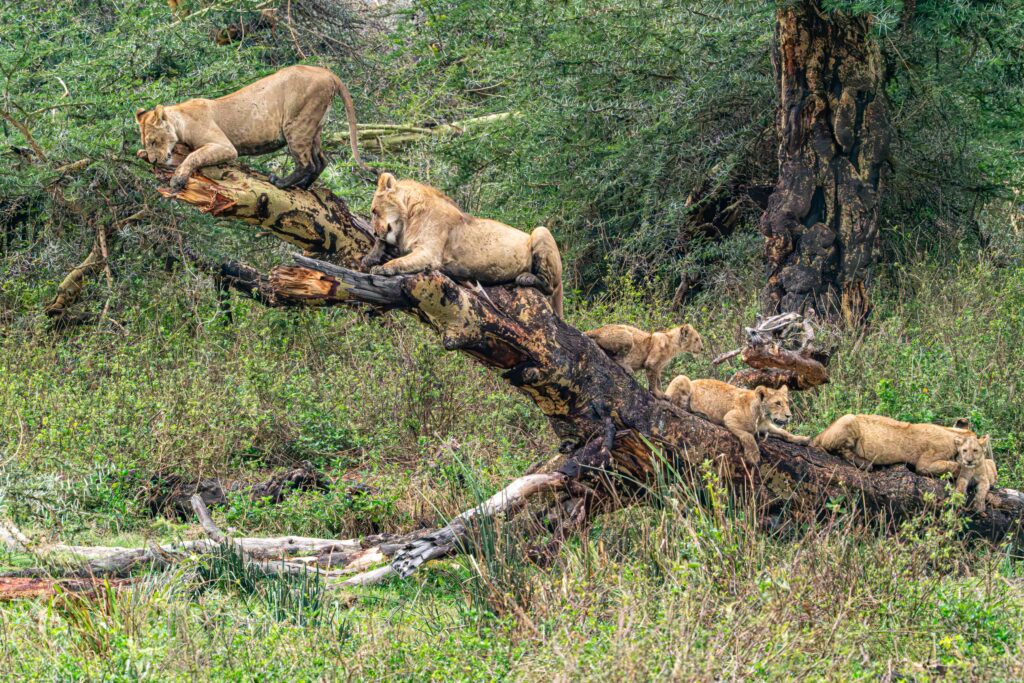
Predators took patience to another level. In Ngorongoro, we watched a lioness and cubs before the adults began organizing themselves for a hunt. Instead of simply getting our lion photograph and driving away, we saw strategy develop. In the Serengeti, we encountered a leopard mother that had carried an antelope into a tree while teaching her cub the skills it would eventually need to survive. Elsewhere, a cheetah stood over a fresh kill while hyenas gathered around the remains of a giraffe.
Those encounters became stories because we stayed long enough to see more than the opening scene. Sometimes the smartest thing your guide can do is ignore the temptation to race toward the latest radio call. Safari rewards travelers who can sit beneath the African sun, watch closely and see what happens next.
Your Safari Company and Guide Matter More Than We Realized
Photo Credit: Jenn Coleman.
Choosing the right safari operator turned out to be one of the most important decisions of our trip, and we were thrilled that we traveled with Altezza Travel.
That choice looks even better in hindsight. Altezza was named Tanzania’s Leading Tour Operator by the World Travel Awards in both 2024 and 2025 and won Tanzania’s Leading Destination Management Company in 2024. The company is also Travelife Certified and became a certified B Corp in July 2025, credentials that recognize sustainability practices ranging from employee well-being to conservation and community impact.
We also appreciated the way Altezza invested in its people. During the COVID shutdown, the company made retaining its staff a priority rather than treating experienced guides as expendable when tourism disappeared. That matters because a great safari guide is not simply someone who drives you from animal to animal. The best guides have years of accumulated knowledge about wildlife behavior, terrain, migration and subtle signs most visitors would never recognize.
A skilled guide notices a flick of an ear in tall grass or the unusual behavior of antelope nearby. They know when a cluster of vehicles in the distance is worth investigating and, just as importantly, when the best decision is to stay exactly where you are.
More importantly, they provide context. Without that knowledge, safari can become a collection of photographs. With the right guide, those photographs become part of a much bigger story about migration, ecosystems, family structure, competition and survival.
For adult travelers with limited vacation time and the ability to spend more for quality, this is not where we would try to save money. We would prioritize the operator, guide, vehicle and itinerary long before worrying about whether the lodge has the fanciest bathtub.
Safari Is Surprisingly Exhausting, Emotionally as Well as Physically
Photo Credit: Jenn Coleman.
You are sitting in a vehicle much of the day. How tiring could that possibly be?
Much more tiring than we expected.
Game drives can begin around sunrise, and the roads are often rough. You spend hours bouncing across uneven terrain while constantly scanning the horizon, photographing wildlife, listening to your guide and trying not to miss the animal that suddenly appears beside the vehicle. Add heat, dust, early wake-up calls, unfamiliar food and the mental stimulation of having something extraordinary around almost every corner, and safari can wear you down surprisingly quickly.
We discovered another side of that exhaustion on our third day.
Our first two days had been almost absurdly good. We were running on excitement, adrenaline and one incredible wildlife encounter after another. By day three, however, we were unexpectedly grumpy and snippy with each other. Nothing was wrong. We were in Tanzania on an adventure we had dreamed about, yet both of us suddenly had much less patience.
At the time, it felt like we had somehow burned through all the feel-good chemicals our brains had available.
The actual neuroscience is more complicated. Serotonin does contribute to mood regulation and social behavior, and research that experimentally lowers serotonin availability has found increased irritability or hostility in some people. Scientists do not, however, have evidence that a few days of intense happiness literally “use up” serotonin.
A more likely explanation is that our nervous systems were simply overloaded. Two days of extraordinary novelty, repeated emotional highs, very early mornings, disrupted sleep, long game drives and constant sensory stimulation had caught up with us. When that heightened excitement began settling toward a more normal baseline, fatigue suddenly became much easier to feel.
Knowing that now, we would treat the emotional side of safari fatigue just like the physical side. Eat something, drink water, get some sleep and do not assume that being briefly irritable with your partner means anything profound about your relationship or the trip.
Sometimes you are simply exhausted after two days of having your mind blown.
We also learned not to treat every available hour as something that must be filled. There is enormous temptation to squeeze in another drive because this might finally be the afternoon when the elusive leopard appears. Sometimes the extra game drive is absolutely worth it. Other times, sitting at camp together, enjoying a drink and watching the evening light move across the landscape is exactly what the trip needs.
You Will Fall in Love With Animals You Never Expected to Care About
Photo Credit: Jenn Coleman.
Most people arrive in Africa with a mental hierarchy of wildlife. Lions, elephants, leopards, cheetahs and rhinos are usually somewhere near the top.
Then the supporting cast starts stealing the show.
A baby giraffe looks impossibly awkward on its long legs. Tiny warthogs race after their mother with their tails standing straight up. An elephant calf vanishes beneath a forest of enormous adult legs. Baboons begin interacting and suddenly you have been watching them for half an hour.
We have experienced the same shift during wildlife encounters elsewhere. When we traveled to Mafia Island, swimming with whale sharks was the headline adventure, but the deeper reward came from sharing the water with enormous wild animals that had absolutely no interest in performing for us.
Alaska reinforced that lesson again. Bears fishing, whales moving through cold water and sea lions gathering along the coast were memorable precisely because we were observing animals carrying on with their own lives.
The more wildlife travel we do, the less interested we become in guaranteed interaction and the more we value responsible encounters where nothing is scripted. Searching is not an inconvenience. It is part of the adventure.
Do Not Judge Your Safari by a Wildlife Checklist
Photo Credit: Jenn Coleman.
There were animals we hoped to see in Tanzania that did not cooperate, but that did not make the safari unsuccessful.
Wildlife travel teaches patience very quickly. Sometimes the animal you desperately want to photograph refuses to appear. Other times you turn a corner and find something more interesting than whatever was on your wish list.
We saw black rhinos at a distance rather than having the dramatic close encounter every photographer secretly hopes for. Other animals remained stubbornly elusive. Meanwhile, encounters we had never planned became some of the photographs and memories we valued most.
A lion does not know your flight home leaves tomorrow. A leopard is unimpressed by how far you traveled or how much your safari cost. An elephant herd may cross directly in front of the vehicle or vanish behind trees before you can even lift your camera.
That unpredictability is not a weakness of safari. It is one of the reasons it feels like a genuine adventure.
Photography Is Harder Than It Looks, but a Few Tricks Make a Huge Difference
Photo Credit: Ed Coleman.
Safari photographs make wildlife photography look deceptively simple. The lion is sitting right there, so surely all you need to do is point the camera and press the shutter.
Then the vehicle moves. The animal moves. The light changes. Your autofocus grabs the grass instead of the leopard. Someone shifts position just as you compose the shot, and before you can recover, the animal turns around.
We came home from Tanzania with thousands of images, but safari reinforced something we had already learned photographing wildlife elsewhere: knowing your equipment before you arrive is essential. This is not the trip for learning where an important camera setting is buried in the menu.
One of our best safari photography tips is surprisingly inexpensive. Bring empty photography sandbags that can be filled once you arrive. They create a stable platform for a long lens almost anywhere along the top of the safari vehicle, and some versions even have straps that allow you to secure them to the vehicle.
We bought a 5-pound bag of rice locally and used it to fill ours. At the end of the safari, our guide took the rice, so we did not have to haul several pounds of filler home. It was an incredibly simple setup, but it made a huge difference when supporting heavy lenses for long periods.
We were equally thankful that we rented a second camera body. One camera could stay paired with the long wildlife lens while the other was ready for animals that suddenly appeared nearby or for wider environmental shots. That meant we were not constantly changing lenses in a dusty safari vehicle, and, more importantly, we were not fumbling with gear while a fleeting wildlife moment disappeared in front of us.
Bring more memory cards and batteries than you think you will need, protect everything from dust and make sure both people understand the camera setup if you are traveling as a couple. We would also recommend putting the camera down occasionally. Some wildlife moments are worth experiencing without a viewfinder between you and the animal.
Pack Less Clothing and More Patience
Photo Credit: Jenn Coleman.
Safari packing lists can make it sound as though you are outfitting an expedition to another planet. In reality, you probably need fewer clothes than you think.
Comfort is much more important than looking like you stepped out of a safari catalog. Lightweight layers, practical shoes, sun protection and clothing that works across changing temperatures will get far more use than elaborate outfits. Early mornings can be cool, afternoons can be hot and dust has an uncanny ability to reach everything you own.
Depending on the accommodations, laundry service can also make packing lighter much easier.
We would prioritize anything that makes long days in the vehicle more comfortable: sunglasses, sunscreen, a good hat, a light jacket for cool mornings, binoculars, camera gear, chargers, extra batteries and a reusable water bottle.
Binoculars deserve a place even if you are carrying a powerful telephoto lens. Sometimes you simply want to watch an animal without photographing it, and binoculars let you enjoy distant behavior without spending the entire day staring through a camera.
Luxury on Safari Means Something Different
Photo Credit: Jenn Coleman.
Safari also changed the way we think about luxury travel.
Beautiful lodges, excellent meals and comfortable beds are certainly welcome, especially after a long day of dust and rough roads. But the luxury we remember most was not marble bathrooms or elaborate decor. It was access, expertise and time.
It was staying somewhere remote enough that the wild landscape continued beyond the walls of our accommodation. At one tented camp, we could hear lions roaring in the darkness. There is something surreal about lying comfortably beneath canvas while the deep sound of a lion carries through the night somewhere outside.
Luxury was also having a knowledgeable guide who knew where to look and enough time in the itinerary that we were not forced to rush every encounter. It was being able to stop the vehicle, turn off the engine and simply watch.
For travelers willing to invest in a premium safari, that is where we would put the money. Location, guiding, small-group or private vehicles, good food and enough time in each destination will influence the experience far more than decorative extravagance.
Build Breathing Room Into the Itinerary
Photo Credit: Jenn Coleman.
When you are traveling all the way to Africa, there is a powerful temptation to see everything. Add another park, another flight, another country and perhaps a few days on the beach before heading home.
We understand because that is exactly how our travel brains work.
But wildlife travel rewards depth. The longer you remain in an ecosystem, the more you begin recognizing patterns rather than simply accumulating sightings. A pride of lions stops being “some lions” and becomes a group of individuals interacting with each other. You start noticing how landscapes change and how animal behavior shifts throughout the day.
After leaving the Serengeti, we flew from the small Seronera airstrip to Mafia Island, where the adventure shifted dramatically from savanna wildlife to the underwater world. Having enough time for both made that contrast much more rewarding than trying to cram everything into a rushed schedule.
For couples planning a major anniversary trip, honeymoon or once-in-a-lifetime adventure, fewer destinations experienced more deeply can ultimately feel far more luxurious than racing across half the continent.
The Circle of Life Is Not Always Pretty
Photo Credit: Jenn Coleman.
Nature documentaries prepare you intellectually for predators and prey. Watching it happen in front of you feels different.
Safari includes adorable babies, protective parents and surprisingly tender interactions. It also includes carcasses, hunting, competition and death. We watched predators feeding, encountered hyenas around the remains of a giraffe and saw animals trying to survive in an ecosystem where virtually everything is connected to something else’s survival.
Those moments can be uncomfortable, but they also deepen your understanding of the animals.
There are no villains. A cheetah killing a gazelle is feeding itself. Hyenas are not sinister cartoon characters waiting to steal someone else’s dinner. Every animal occupies a place within an ecosystem that is much more complex than the simplified stories we often absorb from television.
Seeing that firsthand made nature feel less sentimental to us, but somehow even more extraordinary.
Sometimes the Quietest Moments Stay With You
Photo Credit: Jenn Coleman.
When we think back on Tanzania, we certainly remember the dramatic scenes. We remember predators, newborn animals and the excitement of spotting something difficult to find.
But some of the moments that stayed with us most were quieter.
We remember elephants moving together across the landscape, giraffes silhouetted against the horizon and the strange silence that settles over everything when the vehicle engine switches off. We remember realizing that we were visitors in a place operating according to rhythms that had absolutely nothing to do with us.
We have felt versions of that same emotion swimming alongside whale sharks in Tanzania, watching bears in Alaska and searching northern waters for whales. The more wild places we visit, the more we appreciate encounters that are not choreographed around us.
We do not need the animal to come closer or the experience to be guaranteed. We want it to be real.
The Biggest Thing We Wish We Knew Before Safari
Photo Credit: Jenn Coleman.
If we could go back and give ourselves one piece of advice before our first wildlife safari, it would be to slow down and trust the experience.
Choose your safari operator and guide carefully. Spend your money on the things that actually affect the trip. Give yourself enough days to settle into the rhythm of the landscape. Bring the right photography equipment, but remember that not everything needs to become a photograph. Leave room for fatigue, emotional overload, surprises and an occasional afternoon when doing nothing sounds better than another game drive.
Most importantly, stop measuring the safari by how many famous animals you see.
A wildlife safari can be luxurious, romantic and spectacularly adventurous, particularly for couples who want a trip that feels substantially different from everyday life. Yet the thing we remember most is not a lodge or a checklist.
It is sitting together in a safari vehicle somewhere unimaginably far from home, watching elephants disappear across the African landscape and realizing that, for that moment, there was nowhere else we needed to be.