Wander With Wonder – Discovering Wow Moments Around the World or Across the Street
Discover where to eat in Barcelona with this neighborhood guide featuring authentic Catalan cuisine, seafood, tapas, pintxos, and local dining recommendations from Barceloneta to Gràcia.
Barcelona is a city that rewards hungry travelers. Catalan cooking sits at the crossroads of mountain and sea, tradition and reinvention, and the result is one of Europe’s most rewarding food scenes. But it’s also a city where a wrong turn lands you at a tourist trap on La Rambla paying too much for reheated paella.
The trick is knowing where to look. Rather than chasing a ranked list, the smartest approach is to pick a neighborhood and graze. Here’s how we’d map out a few days of eating in the Catalan capital, from the old fishermen’s quarter to the hill-town streets of Gràcia.
First, Know What to Order
Before choosing where, it helps to know what. Catalan food is its own tradition, distinct from the Spanish cooking most visitors expect.
Start with pa amb tomàquet, bread rubbed with ripe tomato, olive oil, and salt. It arrives with nearly every meal and forms the foundation of the table. Escalivada brings smoky roasted peppers, aubergine, and onion. On the coast, seafood dominates: fideuà swaps paella’s rice for short noodles, and arròs negre takes its dramatic color from squid ink. Order bombas (fried potato balls with a spicy sauce) at least once, and don’t leave without trying crema catalana.
One more piece of local knowledge: Barcelona eats late. Lunch rarely starts before 1:30 p.m. and stretches past 3. Dinner service gets going after 8 p.m., with the real crowds arriving between 9 and 10:30. If you walk into a half-empty dining room at 7 p.m., you haven’t found a hidden gem, you’ve found the tourist schedule.
Where to Eat in Barceloneta and Port Olímpic
The seafront is where Barcelona goes for rice dishes and fresh fish, and it’s where the city’s relationship with the Mediterranean is most visible. It’s also, admittedly, where the tourist traps cluster thickest along the promenade. Choosing well matters here more than anywhere.
Down at the Port Olímpic, El Tribut has become one of the more interesting arrivals on this stretch of coast. This restaurant in Barcelona’s Olympic Port is built around an unusual concept: the whole space is a tribute to Antoni Gaudí, with organic forms and artisan detailing that reinterpret the modernism the city is famous for. The kitchen follows the same logic, taking Catalan culinary tradition and adding a contemporary turn. Their seaside terrace, called the Balcony, hosts live music with a different guest artist on Thursday evenings, which makes it a good pick if you want dinner to become the whole evening rather than just a meal. It’s open daily from 1 p.m. until half past midnight, and there’s free parking, a genuine rarity this close to the water.
A short walk down the coast, Can Fisher on Avinguda del Litoral has built its reputation since 2017 on sea-and-mountain rice dishes made with market fish and local seasonal produce. Their set menus for two are a smart move if you can’t decide. Nearby, Barraca draws crowds for Mediterranean cooking with views over the water from both its terrace and dining room, and Maná 75 is known for its paella and an artfully designed room near the W Hotel.
In Barceloneta proper, step a street or two inland and the quality climbs. Can Ramonet is an unassuming, family-run institution that has been turning out paella for more than 60 years. La Cova Fumada is so beloved by locals that it famously doesn’t bother with a sign, and it’s the spot most often credited with the original bomba.
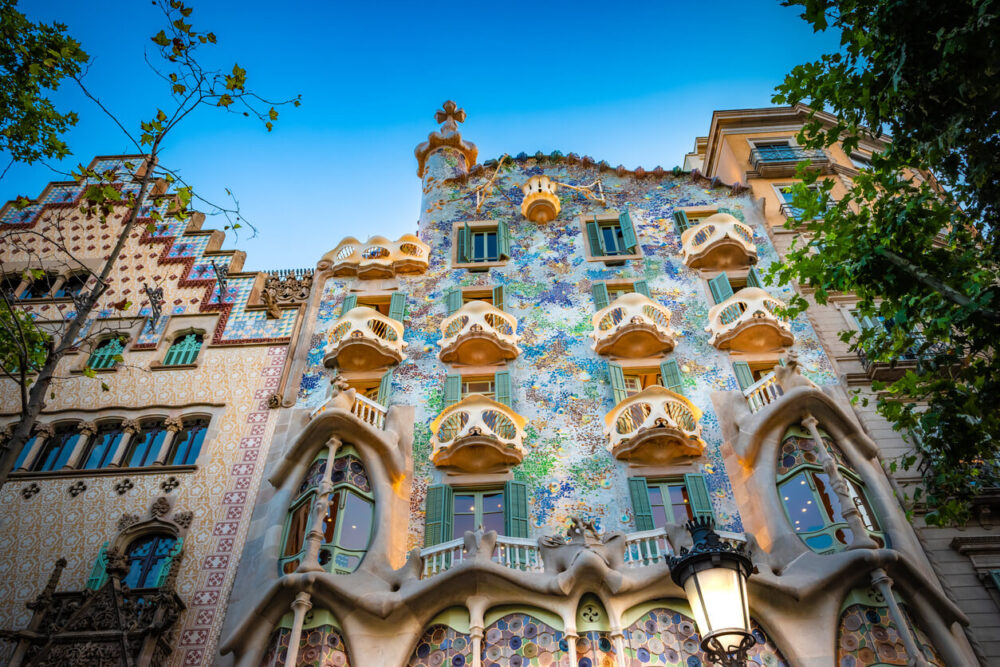
Casa Batlló, designed by Gauí, is in central Barcelona. Photo by Nancy Pauwels via iStock by Getty Images
Best Restaurants in El Born and the Gothic Quarter
These medieval lanes are dense with atmospheric tapas bars, wine bars, and old bodegas. It’s central, lively, and unapologetically touristy on the main drags, so wander off them. The reward for turning down a narrow side street here is usually a marble counter, a short menu, and a vermouth poured without ceremony.
This is the neighborhood for grazing rather than committing. Order three or four small plates, move on, repeat. It’s also worth timing a visit around Mercat de Santa Caterina, whose wave-like colored roof makes it a landmark in its own right, or the far busier La Boqueria off La Rambla, best visited early before the crowds make browsing impossible.
Where Locals Eat in Gràcia
North of the center, Gràcia was a separate village until the city grew around it, and it still feels like one. The squares fill with neighborhood restaurants, the pace slows, and the crowd tilts local. If you want an evening where nobody around you is holding a guidebook, this is where to go.
Pintxos and Local Favorites in Poble Sec
At the foot of Montjuïc, Poble Sec has quietly become one of Barcelona’s most exciting food neighborhoods. Carrer de Blai is the anchor, a street lined end to end with pintxos bars where the standard move is to grab what looks good from the counter and keep count of your skewers.
Beyond the pintxos, Casa Xica blends Catalan and Asian influences, inspired by founders Marc and Raquel’s years living in China, and has become one of Poble Sec’s most beloved neighborhood restaurants, and it’s been going strong for over a decade. Celler Cal Marino is worth the trip for the croquettes and stays worth it for the hospitality. Taverna Can Margarit mixes Catalan and Andalusian dishes and pours free wine while you wait for a table.
Cathedral of La Sagrada Familia in Barcelona. Photo by ValeryEgorov via iStock by Getty Images
Modern Catalan Dining in Eixample
The grid of Eixample is where Barcelona’s more design-forward and ambitious kitchens tend to land. Cruix, a few minutes from Plaça Espanya, sits on the Michelin Bib Gourmand list and is run by a chef who trained at the Michelin-starred ABaC. It’s the kind of place that delivers serious cooking without the fine-dining ceremony or price tag.
Essential Tips for Eating Like a Local in Barcelona
Book ahead. The best tables, especially anywhere near the water, fill up days in advance in high season.
Avoid picture menus. Photographs of paella displayed outside a restaurant on the seafront or La Rambla are the clearest warning sign in the city.
Be suspicious of bright yellow paella. Real saffron is expensive and subtle. Neon color usually means food coloring.
Share everything. Catalan dining is communal by design. Order for the table and let plates circulate.
Don’t rush. A long lunch is not a waste of an afternoon here. It’s the point.
Discover Barcelona One Neighborhood at a Time
Barcelona doesn’t have one best restaurant, and anyone who tells you otherwise is selling something. What it has is neighborhoods, each with its own rhythm and its own reasons to linger: seafood and rice by the water, tapas in the medieval lanes, pintxos in Poble Sec, and quiet neighborhood tables in Gràcia.
This guide to where to eat in Barcelona offers a starting point, but every visit brings new flavors and hidden gems to uncover. For more destination inspiration, local dining guides, and unforgettable travel experiences, explore additional articles on Wander With Wonder.
Pick a district, arrive hungry, eat on local time, and let the city do the rest.
.
The post Where to Eat in Barcelona: The Best Restaurants by Neighborhood appeared first on Wander With Wonder.