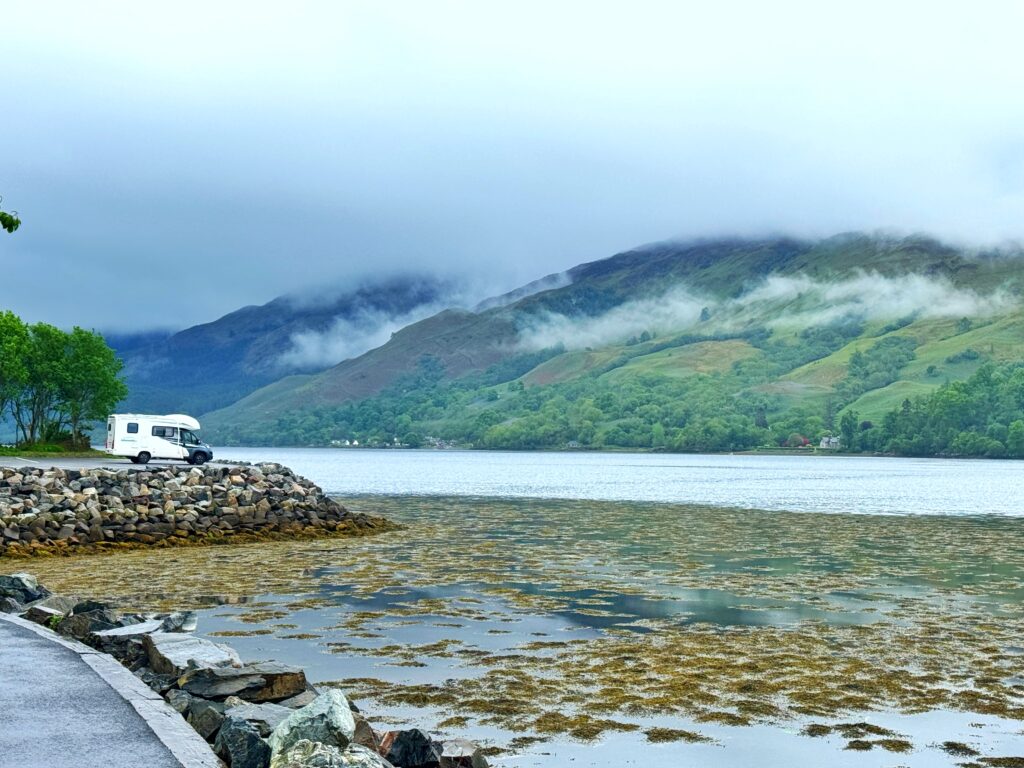
If you ask me, there’s only one way to explore Scotland properly: hit the road.
Scotland is not a country that reveals itself all at once. Its magic lies in the winding roads through Glen Coe, unexpected castle sightings, tiny roadside cafés, dramatic Highland landscapes, and those countless moments when you’ll find yourself pulling over simply because the view is too beautiful not to.
Which is exactly why I believe a campervan is the ultimate way to experience it.
If you’ve ever dreamed of waking up to mountain views, making coffee beside a loch, driving through postcard-perfect valleys, and ending your day at a quiet campsite under a soft Scottish sky, then renting a campervan in Scotland might just be one of the best travel decisions you’ll ever make.
Add to that the country’s excellent camping infrastructure, abundance of campsites, and roads that seem purpose-built for adventure, and you’ve got one of the best campervan destinations in the world.
We spent our Scotland trip living out of a campervan in May, and by the end of it, I couldn’t imagine exploring the country any other way. It turned out to be the perfect blend of freedom, adventure, comfort, and just enough unpredictability to make it unforgettable.
If you’re considering doing the same, here’s everything I wish I had known before renting a campervan in Scotland.
Why Scotland Is Made For Campervan Travel
Scotland feels like it was made for road trips.
From Glen Coe and Inverness to the Isle of Skye and the legendary North Coast 500, you’ll find landscapes so spectacular that stopping every few minutes for photos quickly becomes part of the journey.
The best part is that Scotland is exceptionally well set up for campervan travel. Once you leave the bigger cities behind, campsites are plentiful along most popular routes, particularly around the Highlands and Skye. Many are set in incredible locations, with lochs, mountains, and wide-open countryside right on your doorstep.
One of the biggest questions people have before booking a campervan is whether they’re actually comfortable to drive in Scotland. The good news is that they are. Yes, some roads can be narrow—particularly around the Highlands, Isle of Skye, and other rural areas—but if you’re a reasonably confident driver, you’ll quickly get used to it. Not all roads are single-track roads, and even the narrower routes are generally well maintained.
If you’re coming from a country where people drive on the right, driving on the left may feel strange at first. The first hour or two requires a little extra concentration, especially at roundabouts and junctions, but before long it starts to feel surprisingly natural.
What makes the experience even easier is how courteous Scottish drivers are. People are generally patient, give way where needed, and understand that many visitors aren’t familiar with driving a larger vehicle or navigating rural roads.
One thing you’ll notice throughout the Highlands is the presence of passing places—small pull-in areas on single-track roads that allow vehicles to pass one another safely. They make driving far less stressful than you might imagine and quickly become second nature.
The only thing I’d say is not to rely too heavily on Google Maps’ driving times. A journey that appears to take two hours on paper can easily take longer once you factor in passing places, winding roads, sheep crossings, unexpected photo stops, and those inevitable “wow, look at that view” moments.
And honestly, that’s part of the charm. Scotland isn’t a place that should be rushed.
Click here to read my post on: Here’s everything you need to know about visiting the Isle of Skye in Scotland.
Renting A Campervan
One of the first things to know is that renting a campervan in Glasgow can often be significantly cheaper than renting one in Edinburgh.
Since Glasgow is only around an hour from Edinburgh by train, it’s well worth comparing prices before booking.
We rented from Wee Coo Campers, and I honestly couldn’t recommend them enough. Their campervans were easy to drive, thoughtfully equipped, and ideal for navigating Scotland’s scenic routes. What impressed us most, however, was their customer service. From promptly answering our questions before the trip to the detailed handover at pickup, the father-son duo of Patrick and Jason, made the whole experience feel effortless. If it’s your first campervan adventure, that kind of support goes a long way.
We paid around £80 per day for our rental, although prices vary depending on the season, vehicle type, availability, and extras. Bedding is usually available as an add-on and isn’t particularly expensive. Once you factor in campsites, fuel, and groceries, we still found campervan travel surprisingly affordable compared to paying separately for hotels and a rental car.
One thing I wouldn’t skip, however, is full insurance coverage—it adds a little to the cost but a lot to your peace of mind.
A Note On Pop-Top Campervans
If you’re renting a campervan with an opening tent roof, it’s worth knowing that the upper sleeping area can get noticeably colder at night. While the heater keeps the lower part of the campervan nice and warm, the rooftop section doesn’t benefit quite as much. If you’re travelling during cooler months, ask your rental company about extra bedding or blankets. We did exactly that and slept comfortably throughout the trip.
Where Can You Take A Campervan In Scotland?
Pretty much anywhere scenic—which is most of Scotland. Some of the most popular areas for campervan travel include:
Glen Coe – dramatic mountain scenery and some of the most beautiful drives in the country
Isle of Skye – rugged coastlines, waterfalls, fairy pools, and spectacular viewpoints
Inverness and Loch Ness – ideal if you want a combination of nature, history, and easier driving
North Coast 500 – Scotland’s most famous road trip, featuring remote beaches, castles, and wild landscapes
Loch Lomond and The Trossachs – stunning scenery within easy reach of Glasgow
Whether you’re planning a long Highland adventure or a shorter road trip, you’ll find no shortage of beautiful routes and memorable overnight stops.
Best Time To Rent A Campervan In Scotland
In my opinion, the best time to explore Scotland by campervan is either May or late September.
We travelled in May and thought it was nearly perfect. The landscapes were incredibly green, the daylight hours were long, and the weather was far better than we expected. In fact, we were fortunate enough to experience a mini heatwave, with daytime temperatures of around 25–26°C and pleasant evenings of around 10–12°C.
That said, Scotland’s reputation for experiencing four seasons in a single day exists for a reason. Even if the forecast looks promising, be prepared for sun, wind, rain, and cloud—sometimes all within a few hours. Waterproof clothing and footwear are absolute essentials.
Late September is another excellent option, offering fewer crowds and a lower chance of encountering peak midge season.
Let’s Talk About Midges
Ah, midges. Tiny, persistent little creatures that can quickly ruin a peaceful evening if you’re not prepared.
We visited in May and could already see plenty of them, particularly during the early morning and around sunset. From what we’ve heard, July and August can be considerably worse, especially in the Highlands.
If you’re travelling during midge season, make sure you carry a good repellent spray and use it generously on your face, arms, and any exposed skin. You’ll find effective midge sprays sold in supermarkets and local shops all over Scotland.
Trust me—you’ll thank yourself later.
What Are Campervans Equipped With?
One of the things that surprised us most was how well-equipped campervans are.
Ours came with a fridge, gas cooker, pots and pans, cooking utensils, cutlery, picnic chairs, a table, storage space, heating, and ventilation. Bedding was available as an optional add-on.
In practical terms, this means you can stock up at supermarkets, store groceries in the fridge, and comfortably cook simple meals throughout your trip.
Campervans are also surprisingly well suited to Scotland’s unpredictable weather, with ventilation for warmer days and heaters that keep you comfortable at night without needing to be plugged into electricity.
Campsites In Scotland: What To Expect
One of the things I loved most about camping in Scotland was the setting. Many campsites are located in spectacular locations—beside lochs, overlooking mountains, or tucked away in quiet Highland valleys.
Facilities vary, but most campsites offer clean toilets, hot showers, washing-up areas, and sometimes laundry facilities or electric hook-ups. Just remember that this is still camping, so don’t expect hotel-style amenities everywhere.
Many campsites—particularly in remote parts of the Highlands—don’t have restaurants or cafés on-site. We found it helpful to keep groceries stocked in the campervan and plan meals ahead, especially when staying somewhere isolated.
If you’re travelling during peak season, booking campsites in advance is highly recommended. We visited in May and were surprised by how busy campsites already were, particularly on the Isle of Skye. While some sites accept walk-ins, it’s best to arrive earlier in the day, as many campsites close reception around 7 or 8 pm during summer.
It’s also worth knowing that you can’t simply park a campervan anywhere overnight and treat it as a campsite. Campervans are generally expected to stay in designated campsites, motorhome stopovers, or locations where overnight parking is specifically permitted.
If you ever find yourself caught without a booking, don’t panic. We found locals to be incredibly friendly and helpful. In some areas, hotels, pubs, or local establishments may allow overnight parking in their car parks for a small fee, provided you ask permission first. It’s not something I’d rely on as Plan A, but it can be a useful backup option.
Finally, don’t assume every campsite has the same rules. Some allow barbecues, some don’t. Some permit fire pits, while others prohibit open fires entirely. A quick check before arrival can save a lot of confusion later.
Read here my post on: The Perfect Campervan Itinerary for Scotland & the Highlands (Ultimate Road Trip Guide)
Final Thoughts: Is Renting A Campervan In Scotland Worth It?
Absolutely.
It’s not the most luxurious way to travel. You’ll deal with unpredictable weather, narrow roads, the occasional invasion of midges, and shared campsite facilities.
But you’ll also wake up to mountain views, drink your morning coffee beside a loch, enjoy complete freedom over your itinerary, and experience parts of Scotland that many visitors never see.
For us, campervanning struck the perfect balance between comfort and adventure. It gave us the freedom to linger longer in places we loved, wake up surrounded by nature, and experience Scotland at our own pace.
If you’re willing to trade hotel rooms for breathtaking scenery and a little unpredictability, I honestly can’t think of a better way to explore Scotland.
The post Renting a Campervan in Scotland: Everything You Need to Know Before You Go appeared first on Hopping Feet.