Wander With Wonder – Discovering Wow Moments Around the World or Across the Street
Learn how smart travelers buy an RV online in 2026 using AI-powered RV marketplaces, national inventory access, and expert buying strategies.
For many travelers, the dream of RV ownership starts long before the purchase itself. It begins with weekend road trips, scenic campground stays, and the freedom to explore destinations at your own pace. As RV travel continues to grow in popularity, more travelers are deciding that renting is no longer enough and are looking for a rig they can truly call their own. Fortunately, the process of buying an RV has evolved dramatically in recent years, making it easier than ever to compare options, research features, and purchase an RV online through specialized marketplaces designed for modern travelers.
Buying an RV used to mean visiting dealerships, flipping through printed listings, and hoping the local inventory included something close to what you were looking for. If it did not, you either compromised or drove further.
That experience has changed significantly. The way people find and buy RVs in 2026 looks nothing like it did five years ago. Buyers now have access to national inventory from their living room, AI tools that match them to listings based on their specific needs, and platforms built exclusively for the RV market rather than general classifieds that happen to include a few listings.
The result is that smart buyers are finding better RVs faster, spending less time sorting through irrelevant options, and making more confident purchase decisions. This guide covers exactly how they are doing it.
Understanding RV Types Before You Start Shopping
The single biggest mistake buyers make is starting their search before they have a clear picture of which type of RV suits their needs. Browsing without this clarity wastes time and leads to purchases that disappoint within the first season.
Class A Motorhome
Full-time living, large families, extended travel
Maximum space and residential comfort
High fuel cost, challenging to park
$100,000 to $500,000 plus
Class B Campervan
Solo travelers, couples, weekend use
Easy to drive, fuel efficient, fits anywhere
Limited interior space
$80,000 to $200,000 plus
Class C Motorhome
Families, first-time buyers
Strong balance of space and drivability
Less spacious than Class A
$70,000 to $150,000 plus
Travel Trailer
Families with a tow vehicle, budget buyers
Unhitch at destination, affordable entry point
Requires a capable tow vehicle
$15,000 to $80,000 plus
Fifth Wheel
Pickup truck owners, long-term use
Spacious, stable towing, residential feel
Needs a heavy-duty truck with a special hitch
$30,000 to $150,000 plus
Pop Up Camper
Budget entry, occasional use
Lightweight, compact, affordable
Limited insulation, setup required
$5,000 to $20,000 plus
For most first-time buyers, a Class C motorhome represents the most practical starting point. It is manageable enough for someone new to driving a larger vehicle, comfortable enough for extended use, and does not require a separate tow vehicle. Buyers who already own a capable truck will often find better value in a travel trailer, which gives more living space per dollar spent.
Expert Tip: Rent two or three different RV types before committing to a purchase. Platforms like RVshare and Outdoorsy make this straightforward. A long weekend in a Class C followed by a weekend in a Class B tells you things about your actual preferences that no amount of online research can replicate.
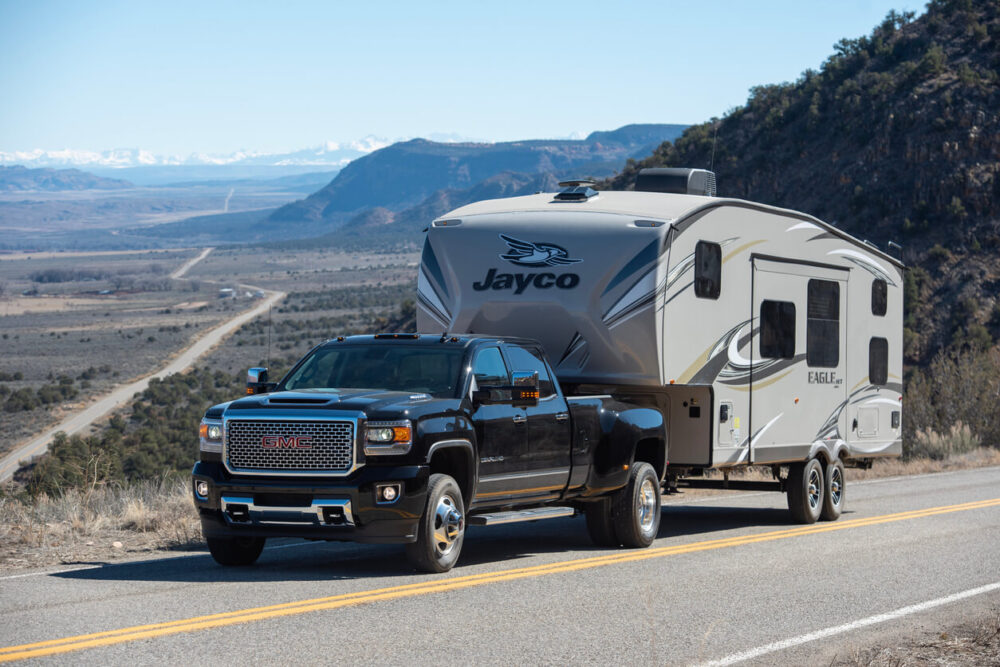
An RVer tows their 5th wheel travel trailer behind a pickup over a country road in the northern Arizona mountains.
Photo by Bruce W Smith via iStock by Getty Images
How RV Buyers Are Using Online Marketplaces in 2026
The most significant shift in how people buy RVs is not in the vehicles themselves. It is in how buyers find them.
Five years ago, the process looked like this. You checked a local dealership, browsed a few general classifieds sites, maybe scrolled through Facebook Marketplace, and worked with whatever happened to be available within driving distance. The experience was slow, geographically limited, and heavily dependent on whether you happened to live near a good selection.
Today, the process looks completely different for buyers who know where to look.
National inventory access means geography is no longer a limiting factor. A buyer in Texas can find and purchase a unit from a private seller in Oregon, arrange a remote inspection, and have the RV transported or fly out to drive it back. The buyer and seller pools are both national.
AI-assisted matching has removed one of the most frustrating parts of the old process. Sorting through listings that were never relevant. Platforms that use buyer-preference inputs such as budget, RV type, intended use, and desired features can surface genuinely suitable listings rather than showing everything and leaving the buyer to filter manually.
Purpose-built RV platforms have replaced general classifieds as the primary search channel for serious buyers. People browsing a general classifieds site are looking at cars, furniture, apartments, and everything else. People on the RV Marketplace are there specifically to buy or sell an RV. That focused intent produces higher quality interactions and faster outcomes for both sides.
Best Places to Buy an RV Online or In Person
Understanding the different buying channels and what each one offers helps buyers choose the right path for their situation.
New RV dealerships offer manufacturer warranties, on-the-spot financing, and professional support. The price reflects all of this. New RVs depreciate steeply in the first two to three years, which means buyers pay a premium for that initial peace of mind.
Used RV dealerships carry inspected inventory at lower prices than new units. Some offer certified pre-owned programs with limited warranties. The markup is higher than when buying privately, but the process is better supported, and the risk is lower than in a purely private transaction.
Private sellers consistently offer the most competitive prices because there is no overhead built into their asking price. The tradeoff is that private sales are almost always as-is with no warranty. An independent inspection from a certified RV inspector is non-negotiable before completing any private purchase.
Online RV platforms have become the dominant discovery channel for buyers seeking a broad selection and the ability to compare options nationwide. The platform’s quality matters here. General classifieds attract an unfocused audience. Purpose-built platforms attract buyers and sellers who are specifically in the market, which improves the quality of every interaction on both sides.
New dealership
First-time buyers wanting full support
Used dealership
Buyers want protection without the full retail price
Private seller via RV platform
Buyers want the best price with a national selection
General classifieds
Local bargain hunting
Use the RV Inspection Checklist Before You Buy
A well-presented RV can hide expensive problems. Never skip a thorough inspection, regardless of how clean the listing photos look.
Start on the exterior. Check the roof for soft spots, cracks, and any evidence of water penetration around seams and vents. Look along the sides for delamination or bubbling in the fiberglass panels. Check tire date codes because RV tires age out before they visually wear out, and a full replacement set on a larger unit is expensive. Look for staining on ceilings, walls, and around windows. Soft spots on the floor indicate moisture damage in the subfloor. Test every appliance, including the refrigerator, stove, air conditioning, and water heater. Run the plumbing and check under every sink for evidence of active or dried leaks.
For motorhomes, review engine service records carefully and note generator hours alongside mileage. Take it on a proper test drive at highway speed, not just around a parking lot.
Guides to verify fair market value before making any offer on a used unit.
Red flags that should end negotiations immediately: A seller who refuses an independent inspection. VIN numbers that do not match the title. Persistent mildew or chemical odors. Soft spots anywhere on the roof or floor. Electrical issues, such as flickering lights or nonfunctional outlets.
A two to three-year-old RV in good condition from a reputable private seller represents the best value entry point for most buyers. The steepest depreciation has already been absorbed, and the quality of a well-maintained unit from a few years ago remains strong.
The Real Costs of RV Ownership
Understanding the full cost picture before you buy prevents the financial surprises that catch first-time owners off guard in year one.
Depreciation
$5,000 to $30,000, depending on age and class
Buy a two to three-year-old unit to avoid the steepest depreciation curve
Insurance
$1,500 to $5,000
Use RV-specific providers for tailored coverage
Storage when not in use
$1,200 to $4,800
Climate-controlled indoor storage protects the investment
Maintenance and servicing
$1,000 to $4,000
Follow manufacturer schedules and keep full service records
Registration
$200 to $1,500, depending on the state
Check your specific state DMV requirements
The most commonly underestimated ongoing cost is storage. Most buyers do not have space to keep a full-size RV at home, and monthly fees add up quickly over the course of a year. Build this into your ownership budget before you buy, rather than discovering it afterward.
The most commonly underestimated ongoing cost is storage. Photo by Michael O’Keene via Shutterstock
Buying vs Renting: Making the Right Call
If you are exploring RV ownership for the first time or plan to use an RV fewer than four times per year, renting makes more financial sense. You avoid depreciation, storage, insurance, and maintenance while still experiencing everything RV ownership offers.
If you plan to travel frequently or want the freedom of having your own rig available whenever you want it, ownership starts to make financial sense. The running costs per trip drop significantly once you own outright.
For buyers ready to start searching, the most efficient approach is to use a platform built specifically for RV transactions rather than a general classifieds site. When you buy an RV online through a dedicated RV marketplace with AI-assisted search, you are only seeing listings that match your actual requirements rather than sorting through thousands of irrelevant options to find the few that fit.
Conclusion
For travelers ready to embrace life on the road, learning how to buy an RV online can make the process faster, smarter, and far less stressful. From comparing nationwide inventory to narrowing down the right RV type for your lifestyle, today’s tools give buyers more confidence than ever before. Explore more RV travel inspiration, road trip planning guides, and outdoor adventure stories on Wander With Wonder.
Frequently Asked Questions
What is the best RV type for a first-time buyer?
A Class C motorhome is the most popular choice for many buyers because it balances drivability, living space, and running costs, making it a better fit than any other category for someone new to RV ownership.
Is buying from a private seller through an online RV platform safe?
Yes, with the right steps. Verify the title independently, run a VIN check, and arrange a certified inspection before completing the purchase. Never send payment before an inspection is confirmed.
How has the RV buying process changed in 2026?
Buyers now have access to national inventory through purpose-built platforms with AI-assisted matching. The process is faster, more targeted, and less dependent on local availability than it was even a few years ago.
What is the most important thing to check when buying a used RV?
Water damage. It is the most common and most costly issue and is not always visible without a thorough inspection of the roof, seams, slide-outs, and interior walls and flooring.
Should I buy new or used for my first RV?
A used RV almost always makes more financial sense. You avoid the steepest depreciation and can find well-maintained units at significantly lower prices. A two to three-year-old unit from a reputable seller is consistently the best starting point.
.
The post How Smart Buyers Buy an RV Online in 2026 appeared first on Wander With Wonder.