Day 1: Arrival in Paro – Rest and Explore
Paro is home to Bhutan’s only international airport, so this is where your journey begins. Use your first day to acclimatize to Bhutan’s altitude and unwind after your flight. In the afternoon, explore Rinpung Dzong (Paro Dzong), an impressive fortress-monastery that perfectly showcases traditional Bhutanese architecture and rich history. Just a short walk away is Kyichu Lhakhang Temple, one of Bhutan’s oldest and most sacred temples, where you can soak in the serene atmosphere and admire its intricate murals. This relaxed pace makes it the perfect day to ease into Bhutan while enjoying the peaceful charm of Paro.
Since Paro is one of the few places in Bhutan where you can visit tourist sites without a guide, you can explore these landmarks independently. However, hiring a guide can add another layer to the experience—they share fascinating stories, legends, and insights about the temples’ founding, sacred relics, and Buddhist rituals, making the visit even more memorable.
In the evening, take a leisurely stroll through Paro Town, browse local handicrafts, and sample some delicious Bhutanese cuisine.
Some of my top recommendations include:
Himalayan Kitchen – Known for its cozy atmosphere and a mix of traditional Bhutanese and continental dishes. I loved the food here!
Mountain Cafe – There are two branches, one offering only vegetarian dishes and the other specializing in non-vegetarian options. It is the perfect choice for casual dining with a view of the valley.
Park 76 – This is for someone looking for a more “western” experience/ nightlife options. A modern, stylish place for a relaxed dinner, with live English music and a selection of local and international flavors.
Whether you’re wandering through historic sites or savoring local food, Paro provides a gentle, immersive introduction to Bhutan.
Recommended place to stay in Paro: Rema Resort.
I loved staying at Rema Resort in Paro. Tucked slightly off town—about a 15-minute walk across the river—it sits on a gentle hill, offering breathtaking views of the valley. The in-house restaurant makes dining effortless, and the spa is a treat, with reasonably priced massages and an authentic Bhutanese hot stone bath that’s the perfect way to unwind after a day of exploring.
Day 2: Tiger’s Nest Monastery Hike
Many travelers prefer doing the iconic Tiger’s Nest Monastery (Taktshang) hike at the end of a 7-day Bhutan trip. Personally, I like to tackle it earlier—on the second day—because I always have more energy and enthusiasm at the beginning of a trip rather than the end. Undoubtedly the highlight of Bhutan, this hike is moderate to challenging and requires a reasonable fitness level, but the experience is more than worth it.
Perched dramatically on a cliff 900 meters above the Paro Valley, Taktshang offers breathtaking views and a deeply spiritual atmosphere. The initial section of the hike involves a steady climb, especially during the first 1–1.5 hours up to the Taktshang Cafeteria, which is a perfect spot to pause, enjoy a cup of tea or a snack, and catch your breath before tackling the next stretch. The final 30–45 minutes of stone steps leading to the monastery are the most challenging, but each step rewards you with stunning vistas of the valley and the surrounding forest.
Once at the monastery, allow about an hour to explore its temples, courtyards, and prayer halls. The descent is faster, but it’s important not to rush—take your time and enjoy the scenery. You can even stop again at the cafeteria for a light meal before heading back down. On average, the entire journey—including the hike, monastery visit, and cafeteria stops—takes about 6 hours.
After such a rewarding day, I highly recommend indulging in a Hot Stone Bath in the evening—a perfect way to relax your muscles and reflect on an unforgettable Bhutanese experience.
Day 3: Paro to Thimphu (1.5 hrs drive time)
On this day, we set off for Thimphu, Bhutan’s capital, ready for a mix of sightseeing and cultural immersion. Our first stop was the Buddha Dordenma, a massive golden statue perched on a hill overlooking the valley. Seeing it up close is truly awe-inspiring—the sunlight glinting off its surface made it almost glow, and the panoramic view of the valley below felt like a moment suspended in time.
Next, we wandered through the Memorial Chorten, a hub of devotion where locals circled the stupa, spinning prayer wheels and murmuring prayers. The rhythmic chants and the scent of incense created a peaceful, almost meditative atmosphere—it was fascinating to witness how seamlessly religion and daily life coexist here.
Afterward, we explored Tashichho Dzong, a fortress-monastery that doubles as the king’s administrative seat. Walking through its courtyards, admiring the intricate woodwork and traditional architecture, I could see why it’s such a central piece of Bhutanese identity. We ended the day at the Craft Bazaar, where colorful textiles, handmade paintings, and delicate souvenirs tempted us at every stall. Thimphu has a calm, unhurried rhythm, and wandering through its streets felt like a gentle introduction to Bhutanese life—a perfect blend of culture, history, and everyday charm.
Click here to book your stay in Thumphu.
Day 4: Thimphu to Punakha via Dochula Pass
The drive to Punakha was every bit as scenic as I had imagined. We made a stop at Dochula Pass, where 108 whitewashed chortens stand in quiet elegance against the backdrop of the towering Himalayas. On a clear day, the snow-capped peaks can be seen clearly. However, we were unlucky with the weather, as the thick clouds and fog completely obscured the Himalayan peaks, hiding the sweeping views we had hoped to see.
There are several interesting stops on the way to Punakha, depending on how much time you have. The first is the Lamperi Botanical Garden, where we paused for about an hour. On a normal day, it’s a charming spot for a leisurely walk, a picnic, or even a boat ride on the lake. However, on our visit, the garden was shrouded in fog and clouds, creating an eerie, almost mystical atmosphere that made the experience surprisingly magical.
While we only watched it from afar, if it is of interest to you, you may also visit the Sangchhen Dorji Lhuendrup Nunnery, where you can witness monastic life up close. Observing the nuns going about their daily rituals and prayers offered a serene and deeply human glimpse into Bhutanese spirituality. Another one we skipped was the Talo Monastery and Village, perched on a hill with stunning views of the valley below. The monastery itself exudes tranquility, while the surrounding village provides a glimpse into the daily rhythms of Bhutanese rural life.
After this, wander through the lush rice terraces of Punakha Valley, beautifully showcasing the region’s traditional Bhutanese farming techniques. As you walk or drive through the valley, you’ll notice many shops, houses, and even roof beams adorned with phallus symbols or carvings. While this may seem unusual at first, it holds deep cultural significance in Bhutan—it is believed to ward off evil spirits, bring good luck, and ensure fertility, reflecting a unique blend of spirituality, folklore, and everyday life that is distinctly Bhutanese. Observing these symbols amidst the serene valley landscape offers a fascinating glimpse into how tradition and belief are woven seamlessly into the rhythm of rural life.
We ended the day with a leisurely walk along the Mo Chhu riverside, letting the calm of the valley wash over us. The river’s gentle flow, the distant mountains, and the surrounding greenery made for a peaceful, reflective end to a day full of history, culture, and natural beauty.
Suggested overnight stay in Punakha: Spirit Village Lodge
Day 5: Exploring Punakha Valley
In the morning, start with a visit to the Punakha Suspension Bridge. It is not just a crossing—it’s an experience. Spanning the Mo Chhu River, it offers stunning views of the valley, the river below, and Punakha Dzong in the distance. Walking across the gently swaying wooden planks, with the crisp mountain air and rushing water beneath, is both exhilarating and unforgettable—a perfect spot for photos or a quiet pause to take in the scenery.
From there, take a scenic walk to , perched on a hill overlooking the valley. The hike takes around 30-45 min one way and offers lush forested paths, prayer flags fluttering in the breeze, and panoramic views of the Punakha and Mo Chhu River. The chorten itself is intricately decorated and serene—a rewarding stop for both spiritual insight and photography.
Next, visit the Punakha Dzong, one of Bhutan’s most iconic monasteries. Admire its majestic architecture, ornate interiors, and the serene courtyards, all set against the backdrop of the converging rivers.
For adventure enthusiasts, optional river rafting on the Mo Chhu or Pho Chhu is a thrilling way to end the day. Gentle rapids make it accessible for beginners, while the scenery along the river provides a unique perspective of the valley.
End the day relaxing at a riverside cafe or your lodge, soaking in the views of the Punakha Valley as the sun sets.
Day 6: Gangtey and Phobjikha Valley
Drive to the tranquil Gangtey, also known as Phobjikha Valley, one of Bhutan’s most beautiful glacial valleys. Wide and bowl-shaped, the valley opens up into sweeping meadows, forested hills, and scattered traditional farmhouses that feel almost untouched by time. It is also the winter home of the rare black-necked cranes, graceful birds that migrate here from Tibet each year. If you are visiting in spring or summer, you’re unlikely to see many cranes as they usually return to Tibet during the warmer months. However, you can still stop by the Black-necked Crane Information Centre to learn about their conservation and the valley’s ecological significance.
Gangtey itself is less of a town and more of a quiet rural village, so it’s best to arrive with the right expectations. This is not a place of bustling cafés or numerous restaurant choices. Accommodation and dining options are limited, and you won’t find supermarkets or shopping streets here. Instead, you’ll come across small tea houses and simple local eateries, and many visitors choose to stay in family-run homestays. Staying with a local family is one of the most rewarding ways to experience the valley—sharing freshly prepared, home-cooked meals, observing everyday life, and experiencing the warm, understated hospitality of rural Bhutan.
But it is precisely this simplicity that makes Gangtey so special. With its expansive landscapes, quiet villages, and fresh mountain air, the valley has a wonderfully peaceful and untouched feel. Life moves slower here, inviting you to pause and simply take in your surroundings.
While in the valley, enjoy a gentle walk along the Gangtey Nature Trail, one of the most scenic and relaxing walks in Bhutan. The trail winds through forests, open meadows, and small villages, offering lovely views across the valley and glimpses into rural life. You can also visit Gangtey Monastery, a prominent spiritual center of the Nyingma school of Buddhism, perched on a hilltop overlooking the valley. The views from here are breathtaking, and the quiet, contemplative atmosphere perfectly reflects the spirit of the region.
A visit to Phobjikha is less about ticking off attractions and more about slowing down and disconnecting. Spend your time taking leisurely walks, enjoying the scenery, or simply relaxing at your lodge while the valley unfolds quietly around you. Many lodges and homestays also offer the opportunity to experience a traditional Bhutanese hot stone bath, a wonderfully soothing ritual after a day of exploring.
In many ways, Gangtey is one of the best places in Bhutan to pause, breathe, and truly absorb the country’s natural beauty and rural charm.
Suggested hotel to stay in Gangtey: Gangtey Pinewood Resort
Day 7: Scenic Drive Back to Paro
On your final day, enjoy a scenic drive back to Paro, retracing your path through Bhutan’s lush valleys, forested hills, and charming countryside.
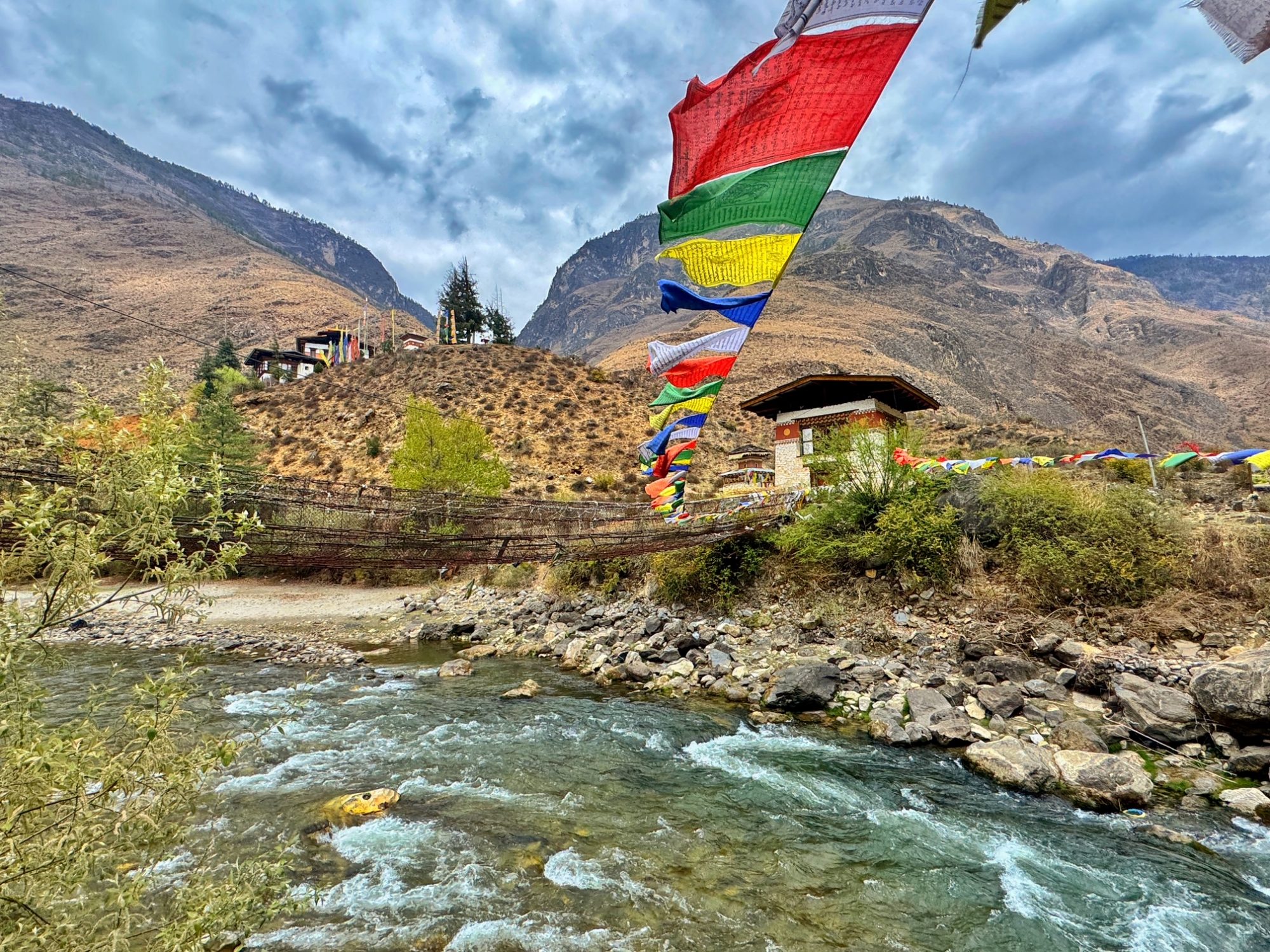
Along the way, consider stopping at Tachog Lhakhang, a small yet fascinating temple tucked quietly into the hillside between Thimphu and Paro. Reaching the temple requires crossing a beautiful iron chain suspension bridge, believed to have been built by the 15th-century Tibetan saint and engineer Thangtong Gyalpo. The short walk across the bridge, fluttering with prayer flags and suspended above the rushing river, adds a small sense of adventure and makes this offbeat stop especially memorable.
A little further along the road, take a break at Your Cafe, one of the cutest cafés you’ll find in Bhutan. Overlooking lush paddy fields and surrounded by mountains, it’s a lovely place to pause for a coffee, light meal, or dessert while soaking in the peaceful countryside views.
Continue onward to Paro and spend the rest of your day at leisure. You might stroll through the town, browse local handicraft shops, or even try on traditional Bhutanese attire—the gho for men or kira for women—at one of the local shops, which makes for some wonderful photographs and a fun cultural experience.
Enjoy a relaxed dinner in town and take time to reflect on your journey through Bhutan—its serene monasteries, dramatic mountain landscapes, and deeply rooted traditions. Long after you leave, it’s often the quiet moments, warm smiles, and peaceful valleys that linger most vividly in your memory.