We have hiked glaciers, slept under unfamiliar stars, crossed oceans, chased wildlife, wandered ancient cities, skied mountains, sailed between lands, and accumulated enough travel stories to keep a dinner conversation going for a very long time.
Most of those adventures were wonderful, some were spectacular, and a handful were so beautiful that we would happily repeat them tomorrow, but only a few actually rearranged something inside us. Those are the journeys we remember differently because they did more than entertain us, impress us, or give us photographs to bring home.
They challenged assumptions we did not realize we had, introduced us to lives almost impossibly different from our own, pushed us beyond what felt comfortable, or showed us a version of ourselves we had not met yet. For couples who have reached the stage of life where another souvenir matters less than another story, this may be the real luxury of adventure travel.
The best trips do not simply take you somewhere new because sometimes they send a different version of you home. After hundreds of adventures together, these are ten that genuinely changed us.
Thailand Taught Us That the World Was Bigger Than We Thought
Photo Credit: Jenn Coleman.
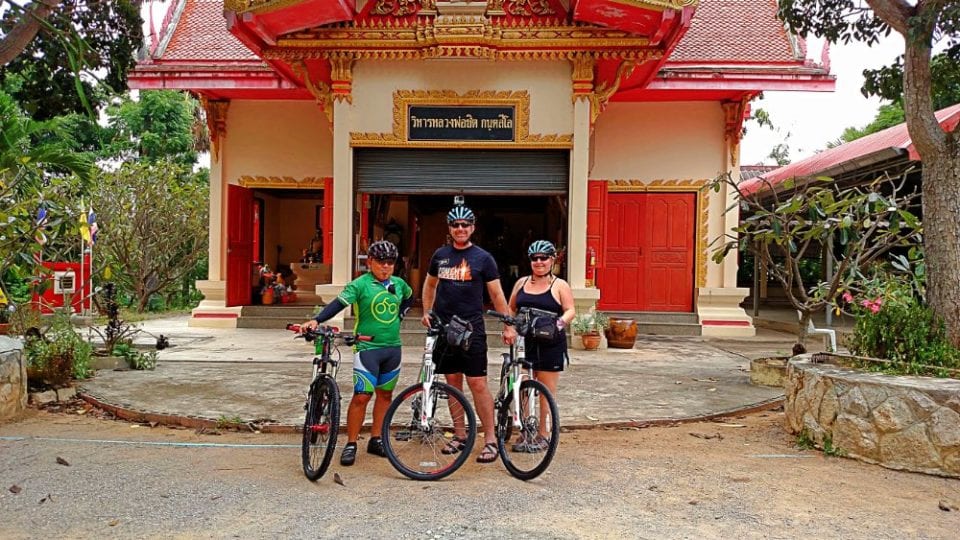
Thailand was our first truly big international adventure, and we did not ease into it with a carefully controlled week at a resort. We went for almost a month, beginning with what unexpectedly turned into a private four-day, three-night 150 mile bicycle journey from Bangkok to Chumphon before catching the ferry to Koh Tao to go scuba diving.
Those first four days became an education in Thailand that we never could have gotten from sightseeing alone. With just the two of us, our guide, and our support driver, we had time to ride through communities and landscapes most visitors rushing between major attractions would never experience, while asking an almost ridiculous number of questions along the way.
Our guide and driver taught us about Thai culture, everyday life, customs, food, religion, family, and the country we were traveling through. Instead of simply looking at Thailand from the outside, we began getting little glimpses into how people actually lived there, and the connection became real enough that we are still Facebook friends with them all these years later.
Then we boarded the ferry to Koh Tao, traded bicycles for scuba gear, and continued what became nearly a month of temples, markets, islands, unfamiliar foods, chaotic streets, long travel days, cultural customs we did not understand yet, and the realization that being confused could actually be part of the fun. Spending that long in the country mattered because there is a point during an extended trip when a destination stops feeling like someplace you are visiting and starts becoming the temporary reality in which you live.
Thailand was also the trip that taught us we could figure things out. We could arrive somewhere far from home, navigate language barriers, change plans, eat something we could not identify, get on unfamiliar transportation, make mistakes, recover from them, and somehow end the day laughing about all of it.
That confidence became the foundation for nearly every ambitious journey that followed. There is something powerful about your first major international trip because before it happens, the world can feel enormous and complicated, but afterward, it somehow feels enormous and accessible at the same time.
Thailand did not cure our desire to travel. It made it considerably worse.
Sri Lanka Made Us Comfortable With Cognitive Dissonance
Photo Credit: Jenn Coleman.
Sri Lanka was different from anywhere we had traveled before, and not in the neatly packaged way destinations are sometimes described as “exotic.” It could be beautiful, chaotic, spiritual, frustrating, welcoming, uncomfortable, lush, noisy, peaceful, and overwhelming within the span of an afternoon, and that contradiction was precisely what made it important.
Travel often gets presented as a collection of pleasant experiences, but Sri Lanka reminded us that meaningful travel can require sitting with feelings that do not resolve neatly. You can admire extraordinary beauty while noticing hardship, encounter tremendous generosity while confronting circumstances you do not fully understand, and love parts of a place while feeling unsettled by others.
That cognitive dissonance forced us to stop evaluating destinations according to whether everything matched our expectations and start paying more attention to what a place was actually showing us. It was one of the trips that moved us away from collecting destinations and toward trying to understand them.
For professional travelers accustomed to comfortable hotels, good restaurants, and carefully designed itineraries, that discomfort can be surprisingly valuable because sometimes the moments that challenge you are the ones that remain long after the luxury suite has disappeared from memory.
Jordan Changed the Way We Think About the People Behind Famous Places
Photo Credit: Jenn Coleman.
Petra is one of those destinations you think you understand before you arrive because you have seen the Treasury in photographs hundreds of times. Then you walk through the Siq, the rock walls narrow around you, that famous facade suddenly appears through the opening, and you realize photographs have barely explained anything.
Yet our most lasting memories of Jordan are not only about monuments. They are about people, and learning more about Bedouin culture complicated the romantic image many travelers carry into Petra, particularly when we began understanding the experiences of families whose histories are deeply connected to the caves and landscapes inside what became one of the world’s most famous archaeological destinations.
Some Bedouin families were relocated from Petra to nearby communities as authorities sought to protect and manage the archaeological site, creating a complicated relationship between tourism, preservation, livelihood, heritage, and a place many considered home. It made us think differently about what happens when a location becomes globally famous.
Travelers can arrive, take photographs, marvel at history, spend a few hours exploring, and leave, while the people whose lives are intertwined with that landscape remain after the tour buses disappear. Jordan reminded us that UNESCO sites, national parks, archaeological wonders, and bucket-list attractions are rarely just scenery.
They are places with living communities, complicated histories, and people whose stories deserve as much curiosity as the monuments themselves.
Egypt Put Our Own Place in History Into Perspective
Photo Credit: Jenn Coleman.
Egypt has a way of destroying your sense of scale. Standing near monuments that were already ancient when much of what we call ancient history had not yet happened makes the human lifespan feel almost comically brief.
The pyramids are familiar enough that it is easy to underestimate the experience before you arrive, but then you stand beside stone blocks larger than you expected, look toward structures that have survived thousands of years, and realize how tiny your own timeline really is.
Egypt changed us because it shifted travel from seeing history to physically experiencing our place inside it. Museums can teach chronology, documentaries can reconstruct civilizations, and books can explain dynasties, but there is something different about walking through spaces built by people whose names disappeared millennia ago while their work remains.
It made some of our everyday worries seem remarkably temporary. That perspective is one of travel’s quieter gifts because the world has existed for an unimaginably long time without us and will continue doing so afterward, which is a compelling argument for using the years in between to actually live.
Surfing, Fairies, and Irish Pubs Taught Us That Ireland’s Magic Is Not a Metaphor
Photo Credit: Pam LeBlanc.
We are not really bar people, and we are not big drinkers either, so nobody was more surprised than us to discover how much we loved Irish pubs. The appeal was not the alcohol because it was the conversation, music, humor, warmth, storytelling, and unusual sensation that strangers did not always remain strangers for very long.
Ireland also gave us surfing, windswept coastlines, dramatic weather, legends, fairy lore, and landscapes where superstition can feel surprisingly reasonable. There are places where stories about fairies sound quaint when read from home and considerably less ridiculous when you are standing beside an ancient landscape wrapped in mist.
Surfing added another dimension because there is nothing especially elegant about pulling on a wetsuit, stumbling into cold Atlantic water, getting knocked over repeatedly, and discovering you are having a fantastic time. Ireland reminded us that adventure does not need to be serious to be meaningful.
Sometimes travel changes you by making you more willing to play, listen to stories, laugh with strangers, suspend disbelief, and walk into a pub even when pubs are not normally your thing. The Irish taught us that joy can be communal, spontaneous, and wonderfully unplanned.
The Midnight Sun in Finland Completely Broke Our Understanding of Time
Photo Credit: Jenn Coleman.
Humans spend their entire lives being trained by the sun. Morning looks one way, evening looks another, darkness tells your brain the day is finished, and then you travel far enough north, suddenly the rules disappear.
Experiencing Finland beneath the midnight sun was disorienting in the best possible way. Your watch says it is late, your body knows it should be tired, yet the landscape is still illuminated and some primitive part of your brain insists there is plenty of day left.
The result is an almost childlike resistance to going to bed because why sleep when the world is still glowing outside? The midnight sun changed the way we thought about the Arctic because until then we had largely imagined northern destinations through winter imagery.
Snow, darkness, auroras, frozen landscapes, and long nights dominate our collective picture of the far north, but Arctic summers possess their own strange magic. There is an energy to seemingly endless daylight that makes adventure feel limitless.
Finland showed us that even something as dependable as nightfall is partly a matter of geography, and few things make the world feel bigger than watching one of life’s supposedly fixed rules suddenly stop applying.
Norway Gave Us Our First Northern Lights and Redefined Wonder
Photo Credit: Jenn Coleman.
There are experiences you anticipate so heavily that you worry the reality cannot possibly compete with the expectation, but seeing the northern lights for the first time north of the Arctic Circle was not one of them.
We had seen countless photographs of auroras before traveling to Norway, but photographs cannot fully explain the experience of realizing the sky itself appears to be moving. The cold, darkness, silence, anticipation, and sheer improbability of what is happening overhead become part of the memory.
Then there was the ice hotel, another experience that sounded almost absurd until we were inside a world deliberately created from winter. Sleeping amid ice forces you to surrender ordinary ideas about comfort and luxury because the luxury is not necessarily warmth, softness, or convenience.
The luxury is getting to experience something extraordinary enough that normal expectations briefly stop mattering. Norway helped redefine what luxury travel meant to us.
A remarkable trip does not always require the largest room, the softest bed, or the most elaborate amenities. Sometimes luxury is standing in freezing darkness while green light moves across an Arctic sky and knowing there is nowhere else you would rather be.
A Tanzanian Safari Changed the Way We See Wildlife
Photo Credit: Jenn Coleman.
Safaris ruined zoos for us a little because there is simply no substitute for seeing animals existing according to their own rules in landscapes large enough that humans feel like visitors rather than managers.
Tanzania gave us moments we had dreamed about and others we could never have scripted. We watched elephants move across enormous landscapes, saw lions occupying the food chain with astonishing confidence, encountered wildlife around every bend, and spent hours observing a leopard with her cub.
The greatest lesson was patience because wildlife does not perform because you booked a trip, spent a considerable amount of money, traveled halfway around the world, or brought an expensive camera. You wait, you watch, and you accept whatever the day gives you.
Then occasionally nature rewards that patience with a moment so extraordinary that everyone in the vehicle becomes quiet. Safari taught us to observe rather than constantly pursue.
It also reinforced something we have increasingly felt throughout our travels: encounters with wild animals are most powerful when the animals remain genuinely wild. We came home from Tanzania more interested in conservation, more aware of how much habitat matters, and even more convinced that some of the greatest travel experiences happen when humans are willing to become spectators.
Swimming With Whale Sharks off Mafia Island Made Us Feel Very Small
Photo Credit: Jenn Coleman.
Our time with whale sharks near Mafia Island in Tanzania was completely different from safari and somehow connected to the same lesson. On land, safari vehicles create a certain psychological distance between you and wildlife, but in the water, that distance disappears.
A whale shark can be enormous yet astonishingly graceful, moving through the ocean with an ease that makes your frantic human swimming seem ridiculous. Entering the water with them changed our perception of scale because suddenly we were not watching nature from the shore, a boat, or a vehicle. We were inside it.
Mafia Island also gave the experience greater depth because our time there included learning about whale shark research and the ecosystems supporting these extraordinary animals. That transformed the encounter from a bucket-list activity into something more meaningful.
Adventure travel is increasingly marketed around superlatives like biggest, fastest, highest, rarest, and most remote, but swimming beside a whale shark reminded us that awe does not always come from conquering something. Sometimes it comes from realizing how thoroughly you do not belong at the center of the story.
Alaska Did Something No Other Destination Has Done
Photo Credit: Jenn Coleman.
We have fallen in love with plenty of destinations, but Alaska is the first one that made us seriously consider rearranging our lives. That distinction matters because we did not simply return home saying we wanted to visit again. We began wondering what it would take to live there.
Maybe it was the combination of glaciers, wildlife, mountains, ocean, endless trails, small communities, enormous distances, northern lights, flightseeing, hiking, boating, skiing, and the feeling that genuine adventure was never very far away. Maybe it was the fact that Alaska makes ordinary life feel slightly less ordinary.
Driving to the grocery store can happen beneath mountains that would qualify as the centerpiece of a vacation almost anywhere else. A weekend can include a glacier, the possibility of seeing a moose is not confined to a wildlife tour, and weather, seasons, distance, and wilderness all still matter.
We have explored Southcentral Alaska, traveled around Anchorage, ventured toward Homer and the Kenai Peninsula, spent time in McCarthy and Wrangell-St. Elias, sailed through Southeast Alaska, watched bears, hiked near glaciers, flown above icefields, and witnessed the northern lights. Every trip somehow made leaving harder.
Alaska also fits the direction our lives have been moving because increasingly we want adventure integrated into everyday life instead of saved exclusively for vacation. We still appreciate a beautiful hotel, an exceptional meal, a spa treatment, and all the comforts that make travel feel indulgent, but Alaska clarified that what we want most is access to wild places.
We are now working toward something that once would have sounded improbable: moving there. Hundreds of adventures have given us plenty of favorite places, but Alaska is the destination that made us question where home should be.
The Best Adventures Change More Than Your Location
Photo Credit: Jenn Coleman.
Looking back, the trips that changed us were not necessarily the easiest, most luxurious, most photogenic, or even the ones we would recommend universally. They were the journeys that disrupted something.
Thailand gave us confidence, Sri Lanka made us comfortable with contradiction, Jordan made us think more deeply about the people living behind the attractions travelers photograph, Egypt changed our sense of time, and Ireland reminded us to play. Finland scrambled our internal clock, Norway showed us awe, safari taught us patience, whale sharks taught us humility, and Alaska made us rethink home.
Perhaps that is why adventure travel becomes more interesting with age. When you are younger, travel can feel like a collection of places you want to see, but eventually the more compelling question becomes what those places might teach you.
For adult couples with careers, responsibilities, comfortable homes, and enough possessions already, experiences begin offering something material purchases rarely can. They interrupt routine, introduce uncertainty, make you depend on each other, give you stories that become part of your shared language, and remind you that it is still possible to be surprised.
We have taken hundreds of adventures, and hopefully there are hundreds more ahead of us, but these ten are different. We did not simply visit them. In one way or another, they came home with us.