Summer may get top billing in America’s national parks, but it is not always the season that delivers the best experience. Popular trails can feel crowded, parking lots fill before breakfast, hotel rates climb, and afternoon heat can turn an ambitious hike into a test of endurance instead of the adventure you imagined.
Once summer ends, many national parks begin to change in ways that make them even more appealing. Temperatures cool, wildlife becomes more active, fall color sweeps across forests and mountains, and the softer light of autumn makes already spectacular landscapes feel even more dramatic. In some destinations, the first snow adds another layer of beauty, while desert parks finally become comfortable enough for serious hiking.
For adult travelers who can escape the traditional summer vacation calendar, fall and early winter can be ideal times for a romantic national park getaway. You can hike hard during the day, linger over a good dinner at night, choose a comfortable lodge or boutique hotel, and experience some of America’s most famous landscapes with a little more room to breathe. These 10 national park trips prove that sometimes the best time to go is after summer ends.
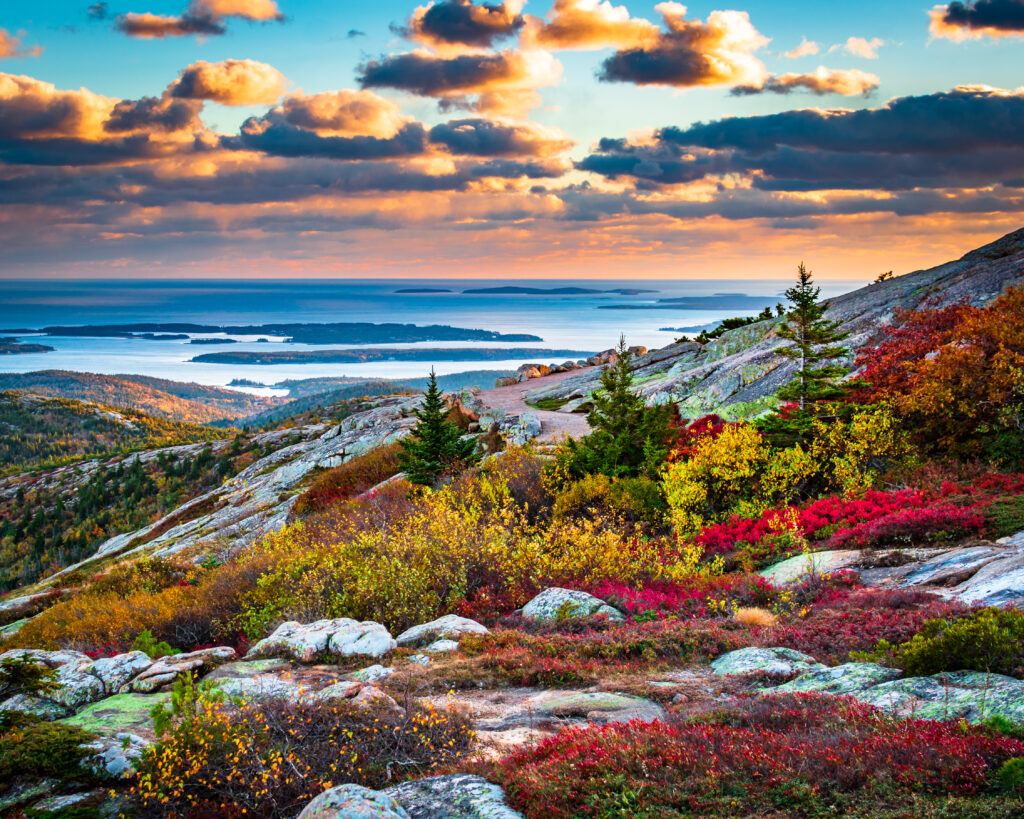
Acadia National Park, Maine
Photo Credit: Deposit Photos.
Acadia National Park is beautiful in summer, but autumn gives the Maine coast a completely different personality. Granite mountains rise above the Atlantic while hardwood forests turn red, orange, and gold, creating one of the most iconic fall landscapes in New England. Crisp mornings and cooler afternoons make hiking and cycling far more comfortable, and nearby Bar Harbor adds just the right amount of romance with seafood restaurants, cozy inns, and waterfront views.
Start the day with sunrise near Cadillac Mountain, then spend the afternoon exploring Acadia’s historic carriage roads by bike or on foot. The park has more than 40 miles of these crushed-stone, motor-free routes, making them an ideal way to explore the changing forest without worrying about traffic.
You can also drive Park Loop Road to reach highlights such as Sand Beach, Thunder Hole, Jordan Pond, and Otter Point. Fall can still be popular, especially during peak foliage, but the experience changes significantly once the summer rush disappears. Visit on weekdays and give yourself several days so you can slow down, hike, enjoy the scenery, and still make time for a lobster dinner overlooking the water.
Rocky Mountain National Park, Colorado
Photo Credit: Deposit Photos.
Fall in Rocky Mountain National Park is about much more than golden aspens. September also brings the annual elk rut, when bull elk bugle across mountain meadows during the early morning and evening. The sound is one of those unforgettable wildlife experiences that makes you stop what you are doing and simply listen.
At the same time, aspen groves begin turning brilliant yellow while the highest peaks may pick up their first dusting of snow. The contrast between golden forests, dark evergreens, and white mountain ridges makes this one of the most photogenic seasons in the Colorado Rockies.
Cooler temperatures also make hiking more enjoyable. Explore the lakes around Bear Lake, look for wildlife in Moraine Park, or choose a longer trail when climbing at elevation feels less punishing than it does in midsummer. At the end of the day, head back to Estes Park for a comfortable hotel, a good meal, and a glass of wine.
Fall weather can shift quickly at elevation, so pack layers and keep your plans flexible. That unpredictability is part of the experience, and sometimes a fresh coating of snow turns an ordinary mountain morning into the highlight of the entire trip.
Zion National Park, Utah
Photos Credit: Deposit Photos.
Zion National Park is spectacular year-round, but hiking beneath massive sandstone walls is far more enjoyable when temperatures begin to fall. By October and November, the brutal summer heat starts to ease, making it easier to spend hours on the trail instead of planning your day around shade and hydration.
Autumn also brings color to the canyon. Cottonwoods and other deciduous trees turn yellow and gold, adding another layer to Zion’s already dramatic red and cream cliffs. The season is perfect for hikes such as the Watchman, Canyon Overlook, and Emerald Pools. More ambitious visitors can look into Angels Landing or check conditions for hiking the Narrows.
One of the best parts of a fall trip to Zion is staying in Springdale. You can spend the day hiking through dramatic canyon scenery, then return to a comfortable hotel for cocktails, dinner, and views of the cliffs glowing in the last light. It creates the kind of adventure-and-indulgence balance that works especially well for couples.
Conditions can still change quickly, and flash-flood awareness remains essential in canyon country. Even so, fall generally offers a much more pleasant hiking experience than the hottest months of summer.
Great Smoky Mountains National Park, Tennessee and North Carolina
Photo Credit: Deposit Photos.
The Great Smoky Mountains do not have just one fall color season because the park covers such a wide range of elevations. Leaves begin changing in the highest mountains first, then color gradually moves downhill into the valleys. That extended progression gives travelers a longer window for experiencing one of the most famous autumn landscapes in the United States.
Cooler weather also makes hiking more appealing. Trails wind through hardwood forests, along mountain streams, and toward waterfalls and rocky viewpoints. Scenic drives along routes such as the Foothills Parkway offer panoramic views across layers of blue ridges, especially in the softer light of morning and evening.
October can still be extremely busy, so timing matters. Travel midweek, start early, and look beyond the most famous destinations. The Smokies are enormous, and it is surprisingly easy to find quieter trails if you are willing to move away from the busiest stops.
For couples, this is also one of the easiest national park trips to turn into a romantic weekend. Book a mountain cabin with a fireplace or hot tub, hike during the day, and return to a comfortable base each evening. The combination of fall foliage, cool weather, and cozy lodging makes the Smokies especially appealing once summer ends.
Bryce Canyon National Park, Utah
Photo Credit: Deposit Photos.
Bryce Canyon already looks like another planet, but autumn and early winter make its landscape even more dramatic. Thousands of red and orange hoodoos fill the amphitheaters below the rim, and cooler temperatures make hiking among them much more comfortable than during the heat of summer.
Fall is an excellent time to hike the Navajo Loop and Queen’s Garden area. The climb back to the rim still requires effort, but cooler weather makes the elevation gain far more manageable. As the season progresses, the possibility of snow adds even more visual drama.
Fresh snow covering red hoodoos is one of the most memorable scenes in any national park. The contrast is extraordinary, especially around sunrise when the first light begins illuminating the formations. Photographers should plan to get up early, but even casual travelers will appreciate how surreal the landscape feels in winter conditions.
Because Bryce sits at high elevation, weather can change quickly and temperatures can fall well below freezing. Pack layers, traction if conditions require it, and a flexible itinerary. The reward is a park that feels quieter, sharper, and even more otherworldly than it does in midsummer.
Grand Canyon National Park, Arizona
Photo Credit: Jenn Coleman.
Looking into the Grand Canyon is breathtaking in any season, but hiking inside it is a completely different experience once summer heat begins to fade. Temperatures below the rim can be dangerously high during the hottest months, which limits how far many visitors can comfortably explore.
Fall changes that equation. Cooler weather makes hikes along the Bright Angel and South Kaibab trails more appealing, although the Grand Canyon still demands respect in every season. Even when temperatures are comfortable at the rim, conditions can be dramatically warmer as you descend.
You do not need to hike all the way to the Colorado River to experience the canyon from below. Descending even a few miles allows you to see the geology from a new perspective and gives you a better sense of the canyon’s massive scale. Afterward, return to the rim and watch the walls change color as the sun drops toward the horizon.
This is also a place where staying longer dramatically improves the experience. Instead of arriving for a few hours, stay two or three nights and make time for sunrise, sunset, hiking, and a slower meal after the day-tripping crowds leave. The Grand Canyon rewards travelers who give it more than a quick stop.
Yosemite National Park, California
Photo Credit: Deposit Photos.
Yosemite in summer can feel like one of the busiest places in the national park system, but fall brings a noticeably calmer rhythm. Waterfalls may not be flowing at spring strength, yet cooler temperatures, lighter crowds, and patches of autumn color give Yosemite Valley a completely different atmosphere.
Black oaks, dogwoods, and maples add splashes of yellow and orange to a landscape dominated by evergreens and massive granite walls. Cooler days make walking and cycling around Yosemite Valley especially appealing, and popular viewpoints become easier to enjoy when you are not constantly navigating peak-season crowds.
Spend time around Cook’s Meadow, bike the valley floor, explore quieter stretches of the Merced River, or hike into the surrounding mountains if conditions allow. Yosemite is one of those parks where slowing down reveals details you might otherwise miss, from changing light on El Capitan to mist drifting through the trees in the early morning.
This is also a destination where a comfortable stay can elevate the entire trip. Spend the day outside, then return to a memorable dinner, a glass of wine, and a warm room. Adventure during the day feels even better when the evening is designed for recovery and relaxation.
Shenandoah National Park, Virginia
Photo Credit: Deposit Photos.
Few roads feel more suited to an autumn road trip than Skyline Drive. The route follows the crest of the Blue Ridge Mountains for more than 100 miles, connecting overlooks, trailheads, waterfalls, and sweeping views across the Shenandoah Valley.
Fall turns the park into a patchwork of orange, red, gold, and green. It is tempting to simply drive from overlook to overlook, but Shenandoah is better when you get out of the car. Hike to waterfalls, climb to rocky viewpoints, watch for deer and black bears, and pack a picnic for one of the quieter overlooks.
Because Shenandoah is relatively close to major East Coast cities, it is ideal for professional couples who want a long weekend that feels much farther from home than it actually is. Instead of racing through in a single day, stay in the mountains or pair the trip with a nearby inn and winery experience.
That combination of adventure and comfort is what makes Shenandoah so appealing after summer. You can hike all morning, sample Virginia wine in the afternoon, and finish with a long dinner without ever feeling like you need a full week away.
Olympic National Park, Washington
Photo Credit: Deposit Photos.
Olympic National Park is often treated as a summer destination because travelers associate dry weather with better conditions. Once summer ends, however, the park starts revealing the moody personality that makes it so distinctive.
Olympic combines mountains, rainforest, lakes, and wild Pacific coastline in one enormous landscape. In fall, moss-covered forests become even more atmospheric, waves pound empty beaches, and mist settles between old-growth trees. Instead of trying to avoid the weather, embrace it as part of the experience.
Explore the Hoh Rain Forest, walk beneath enormous trees, visit Lake Crescent, hike to Marymere Falls, or head toward Rialto Beach and Ruby Beach for dramatic coastal scenery. Bring quality waterproof layers and footwear so that a rainy forecast does not force you inside.
For couples, Olympic is particularly good for a cozy shoulder-season getaway. Spend a wet afternoon hiking through rainforest or walking along a stormy beach, then retreat to a lodge, cabin, or comfortable hotel for a hot meal. The contrast between wild weather outside and warmth inside makes the experience surprisingly romantic.
Death Valley National Park, California and Nevada
Photo Credit: Canva.
Some national parks simply become nicer after summer. Death Valley becomes usable.
Summer temperatures can make even short outdoor excursions dangerous, so the park reveals its best side once the heat begins to ease. By late fall and winter, you can spend far more time exploring on foot instead of moving between an air-conditioned vehicle and quick overlooks.
Walk across the salt flats at Badwater Basin, photograph the sculpted landscape around Zabriskie Point, explore Artists Drive, and hike into canyons that would be brutally hot in midsummer. Cooler conditions also make it easier to spend time on the dunes and stay outside after sunset.
Death Valley is one of the best national park destinations for couples who appreciate dramatic contrast. During the day, you can explore one of the harshest landscapes in North America. At night, retreat to a comfortable resort, enjoy dinner and a glass of wine, and then head back outside beneath an enormous desert sky.
The silence is part of the appeal. Away from the crowds and noise of daily life, the scale of the desert makes everything feel distant and unimportant. For travelers who want a national park trip that feels completely different from a typical mountain or forest vacation, Death Valley is hard to beat.
Why National Park Trips Get Better After Summer
Photo Credit: Deposit Photos.
America’s national parks do not stop being extraordinary when August ends. In many cases, that is when they become more enjoyable. Fall brings bugling elk to Rocky Mountain National Park, gold and crimson forests to Acadia and Shenandoah, cooler canyon hikes to Utah and Arizona, and the possibility of snow among the hoodoos of Bryce Canyon.
For adult travelers with more flexibility than the traditional school-calendar vacation allows, this is also a chance to design a trip around the experience rather than around peak-season crowds. You can hike harder in cooler weather, linger at viewpoints, stay in a nicer room, enjoy a long dinner, and give yourself enough time to experience the landscape at sunrise and sunset.
Summer may be the most popular season for national park vacations, but popularity and quality are not always the same thing. Sometimes the best national park trip begins once summer ends and the landscape finally has room to breathe.