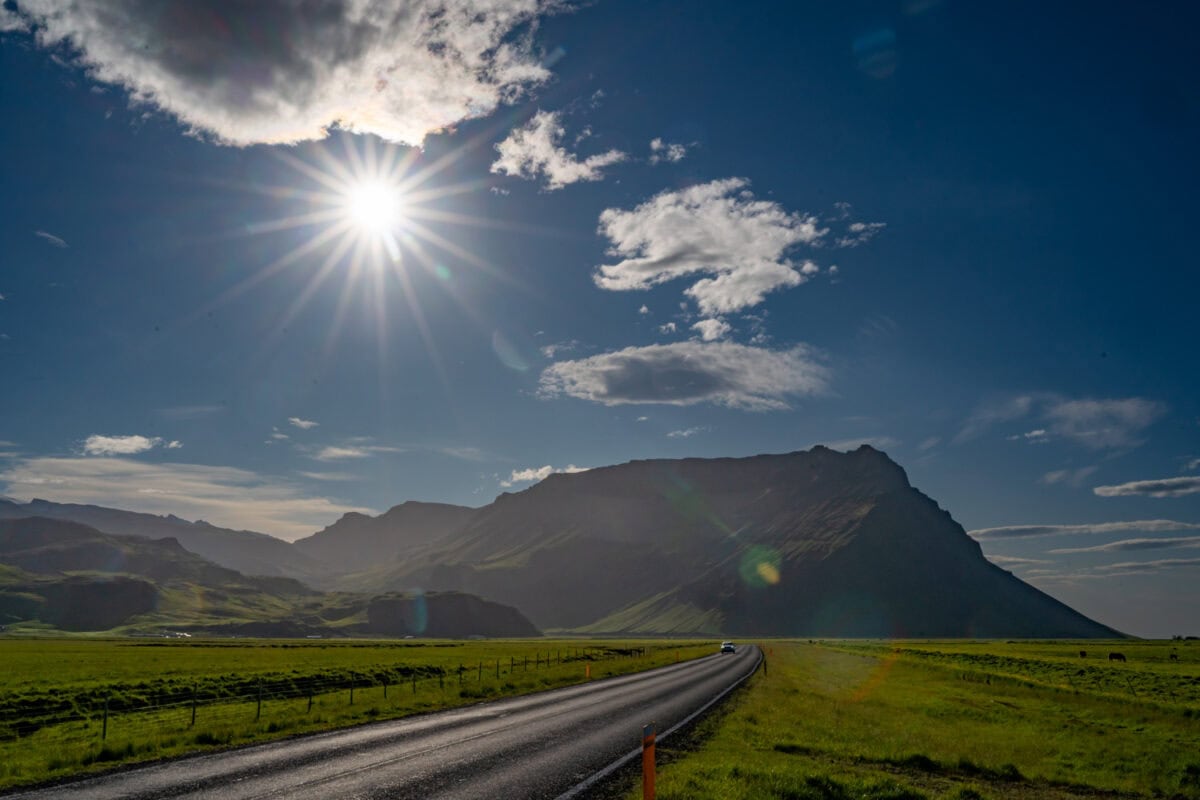
It’s hot everywhere. My inbox, my group chats, my Instagram feed — it’s all people complaining about triple digits. And this year it has a name: the “coolcation.” Search interest in coolcation travel has jumped roughly 300% year-over-year, and searches for cooler destinations overall are up nearly 75% since the start of the year. Turns out I’ve been doing this before it was trendy.
So instead of writing about another beach destination that will bake you alive, I want to talk about the opposite: the moody, glacier-fed, sweater-weather corners of the world I’ve actually traveled to myself. Yes, I know there are dozens of other coolcation-worthy spots on this planet. Patagonia, New Zealand, the Alps, all fair game. But I’m keeping this list honest: these are eight places I’ve personally hiked through, eaten my way across, and in at least one case, kissed a fish in. If you’re melting right now and dreaming of crisp air and fjords instead of humidity and sunscreen, here’s exactly where I’d point you — and why.
The West Nordic Trifecta: Iceland, the Faroe Islands, and Greenland
If you want the ultimate coolcation itinerary, look no further than what I call the West Nordic Trifecta. These three destinations sit clustered together in the North Atlantic, and it’s honestly easier to visit all three than you’d think — it’s hard to get to Greenland or the Faroe Islands without routing through Iceland first, so you might as well tack one (or both) onto an Iceland trip. I once did all three in ten days, which even I’ll admit was a little manic — I’d budget at least four days per destination if you can swing it. Each one is completely different, but they share one thing in common: no trees, dramatic landscapes, and a level of “extreme travel” cachet that only grew after Iceland’s 2010 volcanic eruption grounded flights across Europe and put the whole region on the map.
Iceland: Skip the Ring Road Crowds for Small Towns
Everyone goes to Iceland for the Ring Road and the big-name waterfalls — fair enough, they’re spectacular. But my favorite memories are from the small towns most visitors blow past on their way to the next photo op.
On Heimaey Island, part of the Westman Islands chain, I hiked the Eldfell volcanic cone, formed by a 1973 eruption so sudden it forced a full nighttime evacuation and buried homes in ash (the island actually grew by a square mile in the process). Near the summit, I put my hand in a hole in the ground and felt heat still radiating out of it, more than 50 years later — it’s also home to Iceland’s largest concentration of puffins. In Akureyri, the “Capital of the North,” every stoplight in town is heart-shaped (it makes you happier about having to stop), and I went whale watching by RIB boat on Eyjafjörður before soaking at the wonderfully uncrowded Forest Lagoon — a much quieter alternative to the tourist-mobbed Blue Lagoon. Nearby, Goðafoss — the “waterfall of the Gods,” where Norse idols were reportedly tossed in when Iceland adopted Christianity — looks like a mini Niagara Falls.
In the Westfjords, Ísafjörður is your gateway to Dynjandi Waterfall, nicknamed “the Thunderer,” which tumbles 329 feet over basalt terraces in seven distinct cascades. The roar is real. And in Skógar, population 25, I got up at 6am to walk behind Seljalandsfoss and Kvernufoss with almost no one else around, then tracked down a couple of unmarked falls that don’t even show up on Google Maps — I’m fairly convinced there was some elf magic involved.
READ: 7 Small Towns in Iceland: Landscapes, Waterfalls, and Adventures →
Faroe Islands: Where Sheep Outnumber People
If you want proof a place can be remote and completely unforgettable, it’s the Faroe Islands — 18 islands tucked between Iceland and Norway, home to about 50,000 hearty people and even more sheep. There are only nine stoplights on the entire archipelago and no rush hour, ever.
I ate one of the most memorable meals of my life in a converted hjallur — a traditional Faroese drying shed — cooked by Poul Andrias Ziska, the first and only Michelin-starred chef on the islands. Course after course of fermented fish, lamb, and local birds, paired with drinks poured out of an actual sheep’s horn. In 2025, he opened his own restaurant, PAZ, in central Tórshavn, focusing on sustainability, storytelling through food, and collaboration with local producers
I hiked down into the tiny village of Saksun (population: 13, or 14 after a recent baby was born) to a seawater lagoon carved out by an old storm-blocked inlet, then spent an evening being fed a five-course heimablídni — home hospitality — dinner by a farming couple named Anna and Oli, who told me the story of Oli’s mom cooking fish every Saturday for a husband who loved it even though she hated it. On the tiny island of Nólsoy (population 221), I was welcomed into a visitor center that doubled as a café and fed coffee and rhubarb waffles by a woman named Maryann — the Faroese have a word for this kind of spontaneous coziness: hungi. And a boat trip out to the Vestmanna sea cliffs, among the highest in Europe, put me eye-to-eye with thousands of nesting seabirds.
READ: 5 Unique Experiences on the Faroe Islands →
Greenland: Icebergs, Art, and a Surprising Colors
Greenland is the one people assume is just ice and not much else. I landed in Nuuk, the capital, in mid-April to find snow on the ground and falling from the sky — completely normal, since Nuuk sees snow cover eight months of the year (Ahem…perfect or a coolcation!). What surprised me was the color: bright red, yellow, and blue buildings and striking street art set against a black-and-white landscape, plus a surprising, thriving art scene at the Nuuk Art Museum, including a collection of eerie bone tupilak figurines once used to cast spells on enemies.
I took the Nuuk Water Taxi — a little yellow-and-black boat that made me laugh with its nod to NYC cabs — nearly 50 miles out through the 99-mile-long Nuuk Kangerlua fjord system to Kapisillit, a settlement of about 75 people living in colorful houses with no roads connecting them to anywhere else; boats and planes are the only way in or out. I also went snowshoeing 1,000 feet up Lille Malene mountain with a local guide, and ate my way through some of the most unexpectedly refined food I’ve had anywhere, including reindeer and muskox at a pop-up restaurant, capped off by a dare to drop a chunk of reindeer blubber into my coffee (dare accepted! ). Fun fact: Greenland got its misleadingly lush name from Erik the Red, who needed to convince people to move to a frozen island and figured “Greenland” sounded more appealing than the truth.
READ: Surprising Things to Do in Nuuk, Greenland → Deciding Between Iceland, Greenland, and the Faroe Islands →
Norway: Fjordland Will Ruin You for Regular Scenery
I road-tripped Norway’s Fjordland region from Kristiansund to Ålesund with my friend Michaela. It was the perfect coolcation, and the self drive itinerary means that we escaped the cruise ship crowds. The drive threads past the Atlantimhavsvegen (Atlantic Ocean Road), voted Norway’s “Engineering Feat of the Century,” bridges arcing dramatically over open ocean; up the Trollstigen mountain pass, with its 11 hairpin turns and 9% gradient, where we drove straight into a cloud and did “a lot of gasping” on the way up; and along the Geiranger Fjord, where we kayaked beneath waterfalls tumbling straight into deep blue water.
Along the way, I stopped for a goat burger (and goat cheese dessert) at a farm guesthouse in Norddal that genuinely changed my mind about eating goat, rode the Loen Skylift up 3,300 feet in five minutes for sweeping fjord views, and wandered the Art Nouveau streets of Ålesund at the end of the trip. As the Norwegian Public Roads Administration’s Per Ritzler told me, “There are scenic highways elsewhere in the world. What makes this unique is the use of spectacular architecture and art. No one else has done quite the same thing.” Go at the very start of June, right as Trollstigen reopens for the season — earlier and it’s still snowed in — and expect gray, moody weather more often than the blue-sky postcard shots you see online. That’s part of the charm.
Read about my Norway Road Trip through Fjordland →
Alaska: Glaciers and Wildlife Without Breaking a Sweat
Alaska is my go-to answer whenever someone asks where to go when it’s unbearably hot everywhere else — summer highs in Anchorage average a refreshing 66°F. I’ve flagged down the Alaska Railroad’s Coastal Classic train after kayaking among icebergs at Spencer Glacier, ridden an ATV 22 miles through forest, sand dunes, and a river crossing to reach the 28-mile-long Knik Glacier (our guide Brian summed up the whole state’s ethos: “You don’t truly start to experience what Alaska has to offer until you’re out of cell phone range”), and taken the full-day Coastal Classic round trip from Anchorage to the seaside town of Seward, past Turnagain Arm and through Kenai Fjords National Park.
I’m also a sucker for the Alaska Railroad’s Denali Star and its Gold Star Class dome cars — glass-topped, with an outdoor viewing balcony, where Denali “decided to grace us with its presence” on a rare clear day. My first job out of college was in a railroad’s accounting department and I later got licensed as a train engineer, so watching this scenery scroll by from a train is about as close to meditation as I get. On land, Talkeetna’s three-block Main Street (and its cat mayor) makes an easy day trip, and biking the paved Coastal Trail from downtown Anchorage to Kincaid Park gets you moose, beluga whale, and bald eagle sightings without ever leaving the city limits. If you want the best odds at the northern lights on top of all this scenery, aim for the shoulder seasons of September or March instead of peak summer.
READ: Things to Do in Anchorage, Alaska: Summer & Winter → Riding the Alaska Railroad: A Photographer’s Guide →
Newfoundland: Icebergs, Whales, and Kissing a Cod
Newfoundland might be my favorite “expect the unexpected” coolcation destination on this list. I hiked a stretch of the East Coast Trail with a driver named Jamie who ended every sentence with “right?” and gave me an impromptu history lesson at Signal Hill above St. John’s before I’d even checked into my B&B. Along the coast — all 10,900 miles of it — I watched humpback whales breach just offshore (the world’s largest population of feeding humpbacks summers here, typically May through September), and I have no self-control around local traditions, so I got “screeched in” at Christian’s Pub on George Street: reciting an oath, eating a piece of bologna, and yes, kissing a codfish, all to become an honorary Newfoundlander.
Newfoundlanders are some of the warmest, funniest people I’ve met in my travels — the accent alone is worth the trip, and you’ll quickly learn to love being called a “CFA” (come from away). St. John’s is also home to Jelly Bean Row, blocks of impossibly colorful houses, and George Street itself, a two-block strip of pubs that somehow feels like a slice of New Orleans transplanted to the North Atlantic. If icebergs are on your list too, aim for Iceberg Alley between April and July — though nature doesn’t always cooperate, so don’t bank your whole trip on it.
What to Expect on Your First Visit to Newfoundland →
Cape Breton, Nova Scotia: The Cabot Trail in a Single Perfect Day
Most people budget several days for the Cabot Trail. I’ve done it counterclockwise in one, and it still ranks among the most scenic drives I’ve ever done. Base yourself the night before in Whycocomagh, then start the morning at Charlene’s Bayside Restaurant for an East Coast seafood breakfast — chowder, fish cakes, a homemade biscuit — that I’d rank as one of the best breakfasts of my life, hands down.
From there, the loop takes you through Cape Smokey Picnic Park for coastal views better than any roadside pullout, the 2.4-mile Middle Head Trail out onto a cliff-lined peninsula between two bays, and White Point Harbor, a sleepy former fishing village from 1922 that sees almost no tourists at all. Stop in Pleasant Bay for a lobster dinner on the patio at the Rusty Anchor, complete with whale watching, and keep an eye out around Cheticamp for Sunset Point — an unmarked, secluded beach I stumbled onto completely by accident. End the day in Margaree Forks at the Normaway Inn, where you can catch live Celtic music at the Barn Music Center before crashing for the night. The full loop runs about 185 miles, so budget roughly six hours of actual driving, plus every stop your camera demands.
However – I suggest you stay much more than one day for your coolcation in Nova Scotia! You can also take a drive on any of their scenic highways along the coast and enjoy the cool summer breeze off the ocean in Lunenberg or further south. Or hop over to the lush green west side and check out the fascinating Bay of Fundy’s tidal bore!
READ: My One-Day Cabot Trail Itinerary in Cape Breton →
READ: Things to do in Nova Scotia as you Roadtrip Across the Province→
Ireland: 63°F to 68°F Highs, All Summer Long
If you want proof that a coolcation destination doesn’t have to mean glaciers, look at the numbers: Ireland’s average summer daytime highs run a steady 63°F to 68°F. No heat dome, no humidity spiral — just green hills, moody skies, and a wool cardigan you’ll actually wear. I’ve driven, hiked, biked, and kayaked my way across the west coast on multiple trips (it’s practically a second home to me at this point, and I run small-group tours there), so this is the destination on this list I probably have the most material on.
Start with the Wild Atlantic Way, a roughly 1,600-mile signed coastal route (nothing says cool like the Atlantic coast!) that takes anywhere from two and a half to four weeks to drive in full — though even a week on one stretch is worth it. Yes – you can do the popular stops like the Ring of Kerry, Killarney National Park, and Dingle. However I suggest you go even further north and into the cool temps in Connemara, County Mayo, and Donegal!
In Connemara, out on the Sky Road loop from the town of Clifden, I traded my car for an electric bike (essential — Connemara is not flat) and rode out past grazing sheep to the end of the peninsula in and out of pouring rain, courtesy of a pair of borrowed rain pants from a local shop owner named Amanda. I also went sea-cave kayaking with a guide named Clare, paddling into crashing Atlantic swells to explore cliffside caves while a storm rolled in — she served me tea mid-crossing like it was nothing.
Further north take in County Mayo’s Céide Fields (the oldest Stone Age monument in the world), see Downpatrick Head, Achill Island’s Keem Beach and beachside sauna (sprint straight from the heat into the freezing Atlantic — it’s exhilarating).
Or keep going where few people explore – County Donegal. I was there in May and was wearing a coat the entire time…it’s pretty rare that it gets very hot up there. But you do get some incredible coastal views in one of the least visited counties in Ireland!
Go in May through September for the best weather and daylight, though I’ll always have a soft spot for spring lambs and fall’s quieter roads and cozy pubs.
READ: Ireland Travel Itinerary: 7, 10, or 14 Days in Western Ireland →
READ: Wild Atlantic Way Map and Route Guide →
READ: Unique Things to Do in Connemara, Ireland →
The Bottom Line on Coolcations
When the rest of the world is sweating through another heat wave, these eight places have been my personal coolcation escape hatches for years — fjords, icebergs, whales, sheep-dotted cliffs, and a codfish or two along the way. None of them require you to suffer through triple-digit heat to have the trip of a lifetime. If the “coolcation” trend has you rethinking your summer plans, consider this your permission slip: pick one of these eight, and go find some cold air!
The post The Coolcation Guide: 8 Places I’ve Actually Traveled to Escape the Summer Heat appeared first on OttsWorld.