Wander With Wonder – Discovering Wow Moments Around the World or Across the Street
Discover how road trips encourage purposeful travel, mindful exploration, and meaningful experiences by slowing down and embracing the journey.
In an age of instant communication, next-day delivery, and carefully optimized schedules, speed has become a defining feature of modern life. We are encouraged to move faster, consume more efficiently, and maximize every available minute. Yet alongside this pursuit of convenience, a growing number of people are rediscovering the value of slowing down.
One of the most enduring examples of this shift can be found in the simple act of taking a road trip.
Unlike air travel, where the focus is almost entirely on reaching a destination, driving encourages engagement with the journey itself. The roads traveled, towns passed through, and unexpected discoveries made along the way often become just as memorable as the final destination. In many respects, road trips offer something increasingly rare in modern life: the opportunity to experience travel at a more deliberate pace.
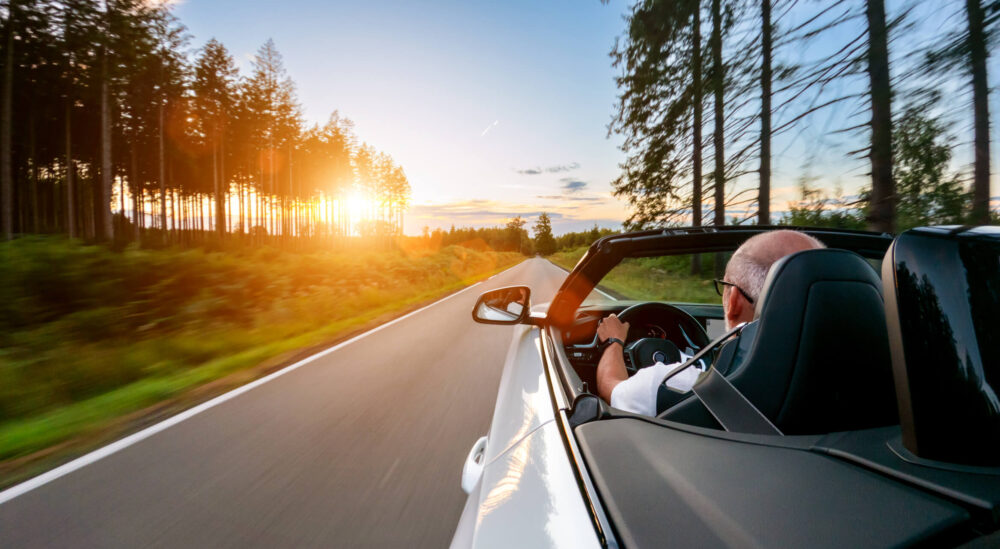
A road trip is a way to slow down and enjoy the journey! Photo by audioundwerbung via iStock by Getty Images
Why the Journey Matters as Much as the Destination
For much of the twentieth century, the motorcar transformed how people explored the world around them. It offered freedom, flexibility, and the ability to venture beyond familiar surroundings.
That appeal remains remarkably strong today.
Road trips differ from many other forms of travel because they place equal importance on the journey and the destination. Travelers are not confined to fixed routes or timetables. They can take scenic roads, stop unexpectedly and change plans as circumstances evolve.
Stopping to explore roadside attractions is one of the best advantages of a road trip. Photo by Susan Vineyard via iStock by Getty Images
This flexibility encourages a different relationship with travel. Rather than moving through locations as quickly as possible, drivers are often more inclined to engage with the places they encounter along the way.
The result is a richer and often more memorable experience.
Finding Hidden Gems Beyond the Fastest Route
Modern transport networks are designed around efficiency. Motorways connect major cities, airports shorten distances, and digital maps identify the quickest available route.
While these developments have clear benefits, they can also reduce opportunities for exploration.
Road trips frequently reveal places that would otherwise remain overlooked. Small villages, independent businesses, coastal roads, and rural landscapes often lie just beyond the fastest route between destinations.
Gary’s Gay Parita vintage service station and tourist attraction on historic Route 66 in Ash Grove, Missouri. Photo by Nicola Patterson via iStock by Getty Images
Many travelers discover that some of their most memorable experiences occur when they deviate from carefully planned itineraries. A local café, an unexpected viewpoint, or a historic market town can become a highlight of the entire journey.
These moments illustrate how purposeful travel often rewards curiosity rather than efficiency.
How Road Trips Encourage Mindful Travel
The concept of mindfulness is often associated with meditation or wellness practices, but it can also emerge through everyday experiences that encourage attention and presence.
Driving through unfamiliar landscapes naturally promotes this kind of engagement.
Weather conditions, changing scenery, and the rhythm of the road draw attention towards the immediate environment. Unlike scrolling through digital content, which constantly shifts focus between competing stimuli, a driving journey unfolds at a pace that allows observations to develop more naturally.
Pronghorn crossing the Wildlife Loop Road in South Dakota’s Custer State Park. Photo by Chad Coppess, courtesy Travel South Dakota
Many motorists describe long drives as mentally refreshing for this reason. The combination of concentration and movement creates space for reflection while maintaining a connection to the surrounding world.
In a culture increasingly dominated by screens, this form of engagement has become particularly valuable.
The Freedom to Follow Unexpected Detours
One of the defining characteristics of road travel is the freedom to adapt.
A traveler arriving at an airport follows a predetermined process. Flights depart at fixed times, and routes are largely non-negotiable. Road trips operate differently.
Plans can change in response to weather, local recommendations, or simple curiosity. A brief stop can become an overnight stay. An unfamiliar road can lead to an entirely new destination.
This flexibility creates a sense of autonomy that many people find increasingly appealing.
In practical terms, it allows travelers to respond to opportunities as they arise. More broadly, it offers a break from the highly structured nature of everyday life.
The ability to choose a direction and simply continue driving remains one of motoring’s most enduring attractions.
Rethinking Time Through Slow Travel
Road trips often alter perceptions of time itself.
Modern life often encourages people to view travel as an inconvenience, separating it from more important activities. The objective is to minimize travel time wherever possible.
Purposeful road travel challenges this assumption.
When the journey becomes part of the experience, time spent traveling no longer feels wasted. Instead, it becomes an opportunity to observe, explore, and engage with surroundings that might otherwise go unnoticed.
This shift in perspective can be surprisingly powerful. Rather than treating every moment as something to optimize, travelers begin to appreciate experiences that unfold gradually.
In many ways, road trips encourage patience in a culture increasingly focused on immediacy.
Road trips encourage patience, inviting you to slow down and soak up your surroundings. Photo by Polina Strelkova via iStock by Getty Images
Why Travelers Form Strong Connections to Their Vehicles
Part of the appeal of road travel lies in the personal relationship people develop with their vehicles.
Cars often become associated with memorable journeys, family holidays, and significant life experiences. They are not merely transportation tools but spaces where stories unfold.
For many people, their vehicle is as important as the road trip itself. Photo by legendaphotos via DepositPhotos
This connection helps explain why many motorists continue to invest in personalization and ownership experiences that make vehicles feel uniquely their own. Businesses such as Plates Express operate within this broader culture of automotive identity, reflecting the importance many drivers place on building a stronger connection with their vehicles.
That sense of ownership often becomes particularly meaningful during longer journeys, where the vehicle serves as both a means of transport and a companion.
Editor’s Note: In the US, check with your state to see how you can use vanity plates. In some states, you can use these if you don’t need an official front license plate. In others, these can only be used as decorative touches. They cannot be used to substitue for your official license plates in the US.
The Growing Appeal of Purposeful Travel
The growing interest in slower, more intentional travel reflects broader cultural shifts.
Many people are seeking experiences that feel authentic, immersive, and personally meaningful. Rather than focusing exclusively on efficiency, they are placing greater value on discovery, flexibility, and connection.
Road trips naturally support these priorities. They encourage travelers to notice details, engage with local communities, and remain open to unexpected experiences.
In doing so, they offer an alternative to the increasingly fast-paced nature of modern life.
Embracing the Road Less Rushed
Road trips continue to hold a unique place within modern travel because they offer something that many other forms of transportation cannot: the opportunity to slow down.
By placing value on the journey itself, driving encourages mindfulness, flexibility, and a deeper appreciation of often-overlooked places. It transforms travel from a process of moving between destinations into an experience worth savoring in its own right.
In a world that frequently prioritizes speed above all else, the enduring appeal of the road trip serves as a reminder that sometimes the most rewarding journeys are the ones taken at a slower pace.
Looking for more inspiration for your next unforgettable journey? Explore more road trip ideas and slow-travel adventures at Wander With Wonder.
.
The post The Rise of Purposeful Travel: What Road Trips Teach Us About Slowing Down appeared first on Wander With Wonder.