Along the calm northern shore of Lake Togo is Togoville, one of those places that feels small but has big meaning. Quiet, reflective, and full of stories, this little lakeside town is the spiritual and historical heart of Togo.
How did we end up in Togoville?
We’ve been exploring Voodoo in Benin – Nina, David, Melissa, and I – catching the Fête du Vodoun (Voodoo festival) in Ouidah. Next up: Liberia. The fastest route is a direct flight from Accra; otherwise, we’re stuck connecting through Europe.
So, how to get from Ouidah to Accra? Why, a road trip, of course!
On the way, we’ll stop, ever so briefly, at interesting spots along the road, including Togoville.
(We also spend a night at the super cosy Hotel Petit Brussel in Lomé, and have a look at Marché des Féticheurs, the fetish market, but I won’t be covering that, as I’m no fan of shrunken dog heads and dead birds. If you’re interested, you can have a look at David’s snaps.)
Togoville: a town that shaped a nation
Togoville holds a unique place in the history of West Africa. This is where King Mlapa III signed a treaty with Germany in 1884, an event that shaped what would become modern Togo. That moment tied this peaceful little town to global history, and even today, Togoville has the quiet dignity of a place that knows its importance.
That’s another German protectorate there. I haven’t realised just how big a role Germany played in the gruesome Scramble for Africa. Did you? You will know about Namibia. But Cameroon? Tanzania, Rwanda, Burundi? And Togo, known as Schutzgebiet Togo in German times. Clearly missing info from my world history classes at school.
German – Togolese friendship monument in Togoville, celebrating 100 years of friendship, or possibly ‘friendship’
Under German rule, Togoville was known as Togostadt and was the capital of the colony. After World War I, the French took over, changed the name to the French version, and so it has remained.
Togoville feels a bit like stepping into a living museum. There are no flashy signs announcing its past here, just stories passed down through the generations. Landmarks whisper, rather than shout. There’s a strong link between yesterday and today.
Spiritual crossroads: Christianity and Vodun (Voodoo) side by side
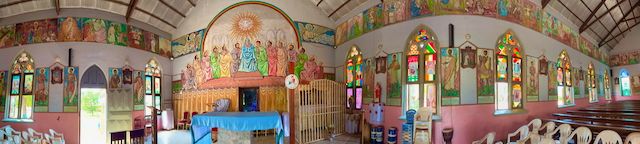
Cathédrale de Togoville
One of the interesting things about Togoville is how different belief systems seem to coexist in harmony. The town has a Catholic cathedral, a striking structure that overlooks the lake and draws pilgrims from across the country. It stands as a symbol of Togoville’s role as a centre of Christian faith.
At the same time, Vodun traditions are very much alive. Shrines, rituals and reverence for the ancestors are part of everyday life, running alongside church bells and Sunday services.
Vodun priest and female fetish/shrine in Togoville. A female fetish always has a roof over her head, to protect the home, we learn.
There’s a nice, quiet balance here, a kind of lesson in tolerance and cultural continuity that you can’t help but notice.
Mary – and Papa Paul
Like in Međugorje, Mary has showed up here in Togoville. One day back in the 1970s, the good virgin appeared before a young girl on the lake. This has been recognised by the Catholic church and the spot where she appeared has been declared holy. And Pope John Paul II even stopped by. His visit in 1985 was a huge event, and it put Togoville on the map.
JPII prayed by the shores of Lake Togo, recognising the town’s deep spiritual significance and its unique mix of faiths.
The holy baobab
Gotta say, I’m more into trees, and in the centre of town, is a sacred baobab. Legend has it, the tree is so old it remembers the arrival of Europeans and even spirits of past kings. Locals say if you tie a ribbon around the tree, or offer a small token, it brings luck or protection, whichever is needed.
Faiths living side by side… We could all learn a thing or two from Togoville.
Life by the lake
Togo means by the water in the local Ewe language, and Lake Togo sets the rhythm of life here.
The lake is more than just pretty scenery. It’s a source of food, transport, and connection, all rolled into one. Fishermen head out early in long wooden pirogues, children play along the water’s edge, visitors arrive by boat from neighbouring towns. That slow approach across the water creates the vibe here. There is no rush in Togoville. Life moves at a calm, gentle pace, shaped by the lake, and the people who depend on it.
You don’t need a particular itinerary. No noise, no crowds. Nobody comes to Togoville for the nightlife. People come for calm. To slow down. To look around, listen, go with the flow. It’s about atmosphere, this place. About sitting under a tree, watch the sun dip into the lake, and let your thoughts drift. Or not think at all.
If you’re interested in history, culture and spirituality, Togoville delivers. There’s no performance, no trying to impress. It just is.
Bambino beauty in Togoville
In many ways, Togoville represents Togo itself; spiritual, rooted in its past, and moving gently into the future. Our visit has been brief, yet it feels like we have had an ever so slight encounter with the roots of a nation.
World at a Glance is a series of short articles here on Sophie’s World, portraying curious, evocative, happy, sad, wondrous, or unexpected little encounters.
Togoville: history, harmony, and the art of staying still is a post from Sophie’s World