Old Québec is North America’s only walled city north of Mexico and a UNESCO World Heritage Site known for its preserved 17th-century architecture, cobblestone streets, and defensive fortifications. Beyond the city walls, a wildly diverse winter landscape unfolds with boreal forests, snow-covered mountains, frozen rivers, and tumbling waterfalls. What ties it all together is a deep sense of history shaped by French, English, and First Nations cultures that continue to define this place.
We recently returned from a winter visit to Québec City and can’t wait to share five standout places to stay, play, and eat in and around Canada’s first city—each offering a different way to experience winter at its best.
Upper Town (Haute-Ville)
Photo Credit: Jenn Coleman.
Upper Town (Haute-Ville) sits high above the cliffs of Cap Diamant, a fortified UNESCO World Heritage Site overlooking the St. Lawrence River. Known for its iconic skyline, historic defenses, and grand architecture, it’s where Québec City makes its strongest first impression. From this vantage point, you can watch icebreakers churn through the river below while the ancient Laurentian Mountains roll away in the distance.
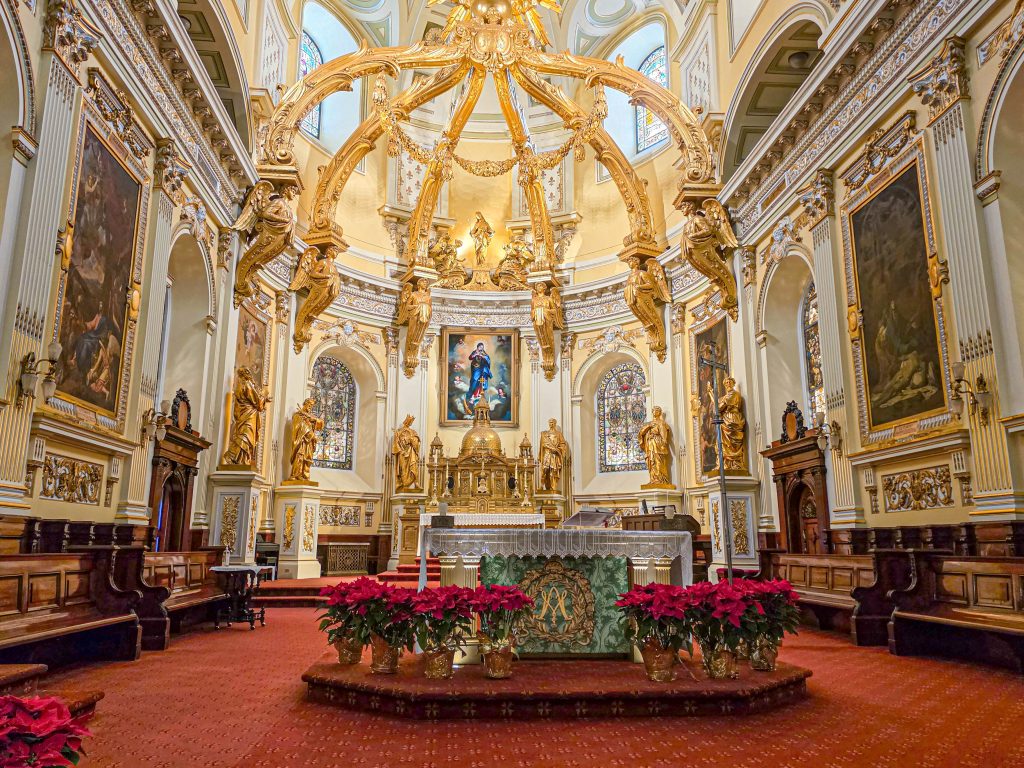
Even with snow blanketing the cobblestones, the sound of French drifting through the cold air feels transportive, as if you’ve stepped into a European alpine village. That feeling deepens inside landmarks like the Cathedral Basilica of Notre-Dame de Québec. Canada’s oldest church, it became the first minor basilica in North America in 1874. During its 350th anniversary in 2014, a Holy Door was installed, only the second outside Europe and one of just eight in the world.
Fairmont Le Château Frontenac
Photo Credit: Jenn Coleman.
The Fairmont Le Château Frontenac is widely recognized as the world’s most photographed hotel and the defining symbol of Old Québec. One of Canada’s original grand railway hotels, its Châteauesque style became the blueprint for similar properties built across the country in the late 19th and early 20th centuries.
Recent renovations seamlessly blend historic grandeur with modern comfort. With 610 rooms and three restaurants, the hotel places you directly in the heart of the Upper Town. If you’re going to take the iconic photo, you might as well stay the night and turn it into a memory instead of just a snapshot.
Toboggan Slide Au 1884
Photo Credit: Jenn Coleman.
Upper Town is packed with historic attractions, from the Citadelle to the funicular climbing at a dramatic 45-degree angle between Upper and Lower Town. But between admiring architecture and sweeping views, don’t forget to let your inner child loose.
The Au 1884 Toboggan Slide on Dufferin Terrace has been thrilling visitors since,unsurprisingly, 1884. We rocketed down the ice track at speeds approaching 40 miles per hour, easily the most exhilarating toboggan run we’ve ever experienced. The views from the top were a surprise highlight, and the hot chocolate waiting at the bottom was the perfect reward. Between those two points? Pure, joyful screaming.
Restaurant La Bûche
Photo Credit: Jenn Coleman.
Québécois culture isn’t European, it’s distinctly New French, with traditions all its own, and La Bûche celebrates that identity with unapologetic enthusiasm. Inspired by traditional maple syrup sugar shacks in a province that produces roughly 70% of the world’s maple syrup, the sweet stuff shows up everywhere—from the classic Caribou cocktail (red wine, whisky, and maple syrup) to maple taffy.
The menu balances comfort and heritage: poutine, duck wings, venison tartare, shepherd’s pie, and pea soup, all served in a space buzzing with warmth and humor. Dining here feels like a joyful nod to the past with enough creativity to keep things fresh. And trust us, you’ll want to check out the bathroom. IYKYK.
Lower Town (Basse-Ville)
Photo Credit: Jenn Coleman.
Lower Town (Basse-Ville) sits at the base of Cap Diamant, just below Le Château Frontenac. Québec City was once Canada’s oldest and most important port, and for a time, the third-largest in North America. As shipping shifted upstream to Montreal, the riverfront evolved into a charming district of boutiques, galleries, and cafés along Petit-Champlain Street.
In winter, the flowers and café parasols of summer give way to glowing snowflakes, Christmas trees, and hockey-themed tributes to the Quebec International Pee-Wee Hockey Tournament. Duck inside almost any doorway and you’ll find warmth, art, and a strong sense of place.
Auberge Saint-Antoine
Photo Credit: Jenn Coleman.
Opened in 1992, Auberge Saint-Antoine was one of Québec City’s first boutique hotels, but its history stretches back more than 300 years. Built on the former Hunt Island (Îlot Hunt) wharves, the property sits atop centuries of maritime commerce. During construction, an extensive archaeological dig uncovered artifacts dating back to the 1600s, many of which are now displayed throughout the hotel.
This thoughtful integration of history, refined luxury, and exceptional service earned the property two MICHELIN Keys, one of only eight hotels in Canada to receive that distinction. We stayed in a suite and couldn’t help but wonder if it was the same one Lady Gaga once occupied. Details like exposed beams and desks crafted from vintage travel cases paired beautifully with modern touches such as Japanese toilets and even dental floss dispensers.
Walking Tour of Old Québec
Photo Credit: Jenn Coleman.
Lower Town trades monumental architecture for layered, intimate details and nuanced vignettes that came alive during our walking tour with Israël from Cicerone Tours. He met us in the lobby of Auberge Saint-Antoine and immediately began revealing stories that were hidden in plain sight.
Four hundred years of history came alive through his stories and observations of these “hidden” details like the historic high tide marker on the sidewalk where the St. Lawrence River reached before it was tamed, the narrow passage de la batterie from the town’s historic fortification, and Pains Bénits Street, named for the tradition of distributing sacred bread.
Lower Town has its impressive sights too, like the massive Mural of Quebecers and the Notre-Dame-des-Victoires Church, Canada’s oldest stone church. Israel took us deeper into these locations, introducing us to some of the historical figures depicted in the mural and how it represents 400 years of history and Quebec’s four seasons. He told us why the church was named for 18th-century French military victories over British fleets attempting to conquer New France, and highlighted the architectural differences between the French and English buildings.
As a consummate host, he balanced our time outside with well-timed opportunities to step inside, warm up, and explore the interiors of iconic structures like the Notre-Dame de Québec Basilica-Cathedral and taking a ride on the funicular.
Dining With the MICHELIN Guide
Photo Credit: Jenn Coleman.
Anthony Bourdain once said, “Food is culture, habit, craving, and identity,” and nowhere does that ring more true than in Québec City. With French, British, Indigenous, and North American influences layered together, dining here offers a direct window into the region’s values and traditions.
Québec boasts 28 MICHELIN-listed restaurants, and we started without even leaving our hotel. Auberge Saint-Antoine’s farm-to-fork approach draws heavily from Île d’Orléans, sourcing organic produce from nearby farms. While we missed dinner at Coteau, Bar Artefact delivered with house-made pasta and beautifully fresh ingredients.
Later, we dined at L’Échaudé, a Lower Town institution for more than 30 years. French classics prepared with Québec meats, an exceptional wine list, and a sense of confidence that comes from longevity. Steak tartare, braised beef, duck confit, and yes, espresso martinis. The pairing raised eyebrows, but the mouth wants what it wants.
Jacques-Cartier
Photo Credit: Jenn Coleman.
Known primarily for Village Vacances Valcartier and nearby winter sports at Jacques-Cartier National Park, the Jacques-Cartier area is a winter playground. While the 35 tubing slides and indoor waterparks draw families, we focused on quieter, more refined cold-weather experiences.
Silent Nights at Hôtel de Glace
Photo Credit: Jenn Coleman.
We were lucky enough to get a room at the Hôtel de Glace, North America’s only ice hotel. The structure is rebuilt each year from 45,000 tons of snow and 3,000 blocks of ice, with a new annual theme created by a team of 15 sculptors. This year’s theme was “The Hôtel de Glace comes to life,” where art, light, and emotion come to life with icy decorations and a blazing imagination. The interior temperatures were about 20 degrees F, but we stayed snuggly warm in the expedition sleeping bags they provided. We also had an interior room at Hôtel Valcartier for changing, showering, and peace of mind if the night grew too cold. We slept comfortably through the night, immersed in a deep silence as the snow walls absorbed all sound.
Every year, there are only about 50 or so rooms at the ice hotel, depending on the current configuration, yet some years it receives more than 100,000 visitors. You don’t have to stay at the ice hotel to visit; in fact, we were glad that we had time to visit during the day before our room opened at 9:00 PM. Each room has a unique theme, with the most impressive displays in the entry hall, cathedral, and ice bar.
Snow Shoeing at Jacques-Cartier National Park
Photo Credit: Jenn Coleman.
Jacques-Cartier National Park is a little farther from Québec City than Village Vacances Valcartier. It’s a premier outdoor destination featuring a dramatic 1800’ deep glacial valley and the Jacques-Cartier River. In the winter, its 60 miles of trail are open to snowshoeing, cross-country skiing, and fat-tire biking.
We wanted to go snowshoeing in Quebec because it’s a culturally important activity for the local Wendat Nation. The traditional Wendat design is characterized by a distinctive long, narrow, and slightly upturned tail, but we rented modern gear from the park’s Discovery and Visitors Centre. Our trail followed the river, so it was relatively flat, but exceptionally well-maintained. The tracks were wide and deep enough that many people didn’t need snowshoes. However, just off the trail, untouched snow glistened like a Christmas card.
Hôtel de Glace Restaurant
Photo Credit: Jenn Coleman.
Village Vacances Valcartier has several restaurants well suited for families with kids, but we dined at the Hôtel de Glace Restaurant for a Boreal-inspired meal by Fairmont Le Château Frontenac. Every table was carved from ice, with special adaptations for cold-weather service. Dinner featured a preset menu with a single service, but it was a gastronomic experience we would expect from Fairmont Le Château Frontenac.
We have two suggestions following our dinner at the ice hotel. First, dress even warmer than you think you need. Sitting still on an ice chair gets quite cold. Secondly, this opportunity is available from a chartered shuttle from the Fairmont Le Château Frontenac, even if you are in Québec City without a car. The trip includes a shuttle, a guided tour of the ice hotel, a welcome drink, and (of course) dinner.
Wendake
Photo Credit: Jenn Coleman.
Wendake, a self-governing Wendat enclave, is a short drive from Old Québec. It’s a vibrant cultural hub that combines a rich historical heritage with modern economic development, tourism, and efforts to revitalize the Wendat language, making it a major tourist destination focused on preserving its Indigenous culture. Wendake offers a blend of historical education and contemporary Indigenous experiences, making it a premier center for preserving Wendat culture in Canada.
Hôtel-Musée Premières Nations
Photo Credit: Jenn Coleman.
The Wendake features the Hôtel-Musée Premières Nations, a 4-star boutique hotel that reflects Wendat culture. All the rooms were recently refreshed, creating a clean and comfortable stay, but we loved the authentic artifacts throughout the hotel, including the rooms, a well-appointed gift shop, and the on-site museum.
If you’re looking for an immersive and authentic experience, you can stay in the hotel’s national Ekionkiestha longhouse. This unique experience allows you to travel back to pre-colonial times. The package includes the “Myths and Legends” activity, which celebrates the Wendat’s tradition of oral storytelling through captivating First Nations myths and legends, as well as a guided tour of the museum. This activity is offered year-round, including the depths of winter. The longhouse is heated by three fires, and you’re provided a weather-appropriate sleeping bag, but, like the ice hotel, you’re also provided a room in the hotel for your convenience and peace of mind.
Onhwa’ Lumina
Photo Credit: Jenn Coleman.
Storytelling by an open fire is an age-old tradition, but the Wendake embrace the future with the Onhwa’ Lumina, an immersive multi-media experience along an enchanted night walk. The 3/4-mile dream-like journey has seven distinct stops that introduce you to Wendat history and way of life through stunning vignettes that play on a loop.
We thought it was beautiful and visually stunning, especially with the forest blanketed in a fresh dusting of snow. However, the longer we walked, the more we began to view the world from a Wendat perspective, from creation to the power and wisdom of the ancestors. We wish we had brought our headphones so we could have followed along with the additional information provided by their app and the QR codes you could scan along the way.
La Traite
Photo Credit: Jenn Coleman.
Our immersive experience of Wendat culture continued at La Traite, a restaurant located within Hôtel-Musée Premières Nations that features indigenous-inspired cuisine. The executive chef, Anita Collier Gros-Louis, is the daughter of a family chief and the granddaughter of a former Grand Chief. Her bio says, “She believes that a traditional dish of our Nation most often begins with the Three Sisters (corn, squash, and beans). Her passion is preparing meals based on game, fruit, and vegetables, whether in the traditional manner or with a more contemporary touch.”
We opted for the smoked wild boar sandwich and venison shank with linden berries, and they were delicious. If we could stay for the night, we would have indulged in café en flambé for dessert. The table next to us ordered this dish, and we watched the table-side service with a touch of envy as they caramelized sugar on the rim of the glass before adding several flaming shots of liquor.
Côte-de-Beaupré
Photo Credit: Jenn Coleman.
Côte-de-Beaupré is a region, 20 miles northeast of Québec City, in the foothills of the Laurentian Mountains. Saint Anne is the patron saint of sailors, and the first church was built in 1658 to protect against shipwrecks off Île aux Oeufs on their way upriver to Québec City.
Mont-Sainte-Anne, a local ski resort, is only a 40-minute drive from Québec City and receives approximately 260 inches of snow every year. The diverse terrain offers runs for all ability levels, with breathtaking views of the St. Lawrence River below.
Mont-Sainte-Anne, Resort & Convention Center
Photo Credit: Jenn Coleman.
We stayed at the Mont-Sainte-Anne, Resort & Convention Center, a Delta Hotel within the Marriott umbrella. It was clean and comfortable, as you would expect from Marriott, but the ski-in/ski-out access to the mountain was remarkable.
They have an in-house rental shop, ski lockers, and ticket kiosks in the lobby, so you can walk right out of the back of the hotel and be ready to ride up the gondola. They also have convenient features like free parking, in-house restaurants, and an outdoor hot tub so you can soak in the snow.
Les Secrets Nordiques
Photo Credit: Jenn Coleman.
Skiing at Mont-Sainte-Anne is the biggest draw, with a 2,050-foot vertical drop and 71 trails over 547 acres, but it’s not the only attraction. The mountain’s location near Québec City makes it an excellent destination for groups with non-skiers or those looking to expand their activities beyond the slopes. Nearby 272 foot tall Montmorency Falls is a mecca for ice climbing and a beautiful destination for winter hikes, and the city is close enough for day trips as well. We particularly enjoyed dog sledding with Les Secrets Nordiques, which is only a 15-minute drive from the resort.
We went out with the owner, Bruno Saucier, who told us it was his plan to have the friendliest dog teams. He started with in-house breeding, lots of socialization, and a daily routine focused on the dogs. Jenn has been dog sledding around the world, including Alaska and Norway, and she said these were the best-behaved dogs she had met.
We went out for about an hour-long run through the snow-covered forest, taking turns with different driver and passenger configurations. Mushing through the forest was peaceful and relaxing as we continued our dialogue with our team in French: Allez, dou, très bon chien. Bruno asks his guests to reward their dogs with affection after the run, which we were happy to oblige. It seemed like the dogs enjoyed their afternoon with us as much as we enjoyed them.
Brasseur des Monts
Photo Credit: Jenn Coleman.
Brasseur des Monts is more than a microbrewery; it’s an introduction to the mountain. They claim, “Each of our beers is inspired by the places, people, and activities surrounding Mont-Sainte-Anne. These anecdotes have inspired our brewer, Raph, to create beers with unique flavors,” and we agree.
It’s conveniently located between Les Secrets Nordiques and Mont-Sainte-Anne, so we stopped in for happy hour after our afternoon of dog sledding. The beer menu was creative, diverse, and constantly changing. I selected a Belgian blonde, which was delicious with an orange slice, and paired it with the BDM burger and pulled pork poutine.
Côte-de-Beaupré is in farming country, so BDM can source much of its menu from local providers. They also pay culinary homage to the region with specials like pouding chômeur (literally “unemployed person’s pudding”), with their own twist: adding a sweet beer that settles to the bottom during baking, creating a gooey, caramelized layer.
Winter in Québec City: Worth the Cold, Every Time
Photo Credit: Jenn Coleman.
Québec City in winter is not a single experience; it’s a layered one. History stacks on top of culture, which stacks on top of food, landscape, and tradition, all softened by falling snow and warmed by genuine hospitality. One moment you’re walking through a walled city older than the nation itself, the next you’re snowshoeing along a glacial river, dining in an ice hotel, or listening to stories that predate colonial maps altogether.
What surprised us most wasn’t just how much there was to do, but how cohesive it all felt. Upper Town’s grandeur, Lower Town’s intimacy, Wendake’s living culture, Valcartier’s quiet drama, and Côte-de-Beaupré’s alpine energy each told a different chapter of the same story. Winter didn’t limit the experience—it clarified it. The crowds thinned, the pace slowed, and the details stood out.
Québec City rewards curiosity. Stay somewhere with a story. Eat meals that reflect the land. Say yes to experiences that feel a little unfamiliar, whether that’s sleeping inside snow walls, mushing through a forest, or following a Wendat creation story under the stars. Dress warmly, walk often, and leave room in your schedule to linger.
Winter here isn’t something to endure. It’s something to savor.