Wander With Wonder – Discovering Wow Moments Around the World or Across the Street
Discover portable kayaking adventures with expert tips on gear, packing, safety, and exploring hidden waterways around the world.
What is Portable Kayaking
Modern tourism frequently restricts exploration to crowded boardwalks and strictly scheduled boat tours. However, a significant shift in outdoor equipment now allows independent travelers to carry their own vessels in standard checked luggage. This capability grants autonomy over aquatic itineraries and opens access to secluded environments that remain unreachable for the average tourist. By prioritizing portability without sacrificing stability, adventurers can discover the silent and untouched corners of the world from a unique vantage point.
The technology behind portable watercraft has evolved drastically beyond the simple beach toys of previous decades. High-performance materials now enable the creation of hulls that rival the rigidity and tracking of traditional hard-shell boats. Consequently, explorers can paddle with confidence in variable conditions ranging from calm alpine lakes to moving coastal waters. Identifying the best inflatable kayak for a specific itinerary requires a careful analysis of weight limits, durability, and on-water performance.
Accessing water independently changes the fundamental nature of a travel experience. Instead of viewing a coastline from a distant observation deck, travelers interact directly with the marine environment and local geography. This approach fosters a deeper connection with nature while eliminating the recurring costs associated with rental agencies. Furthermore, having a vessel ready at all times allows for spontaneous exploration whenever a promising waterway appears.
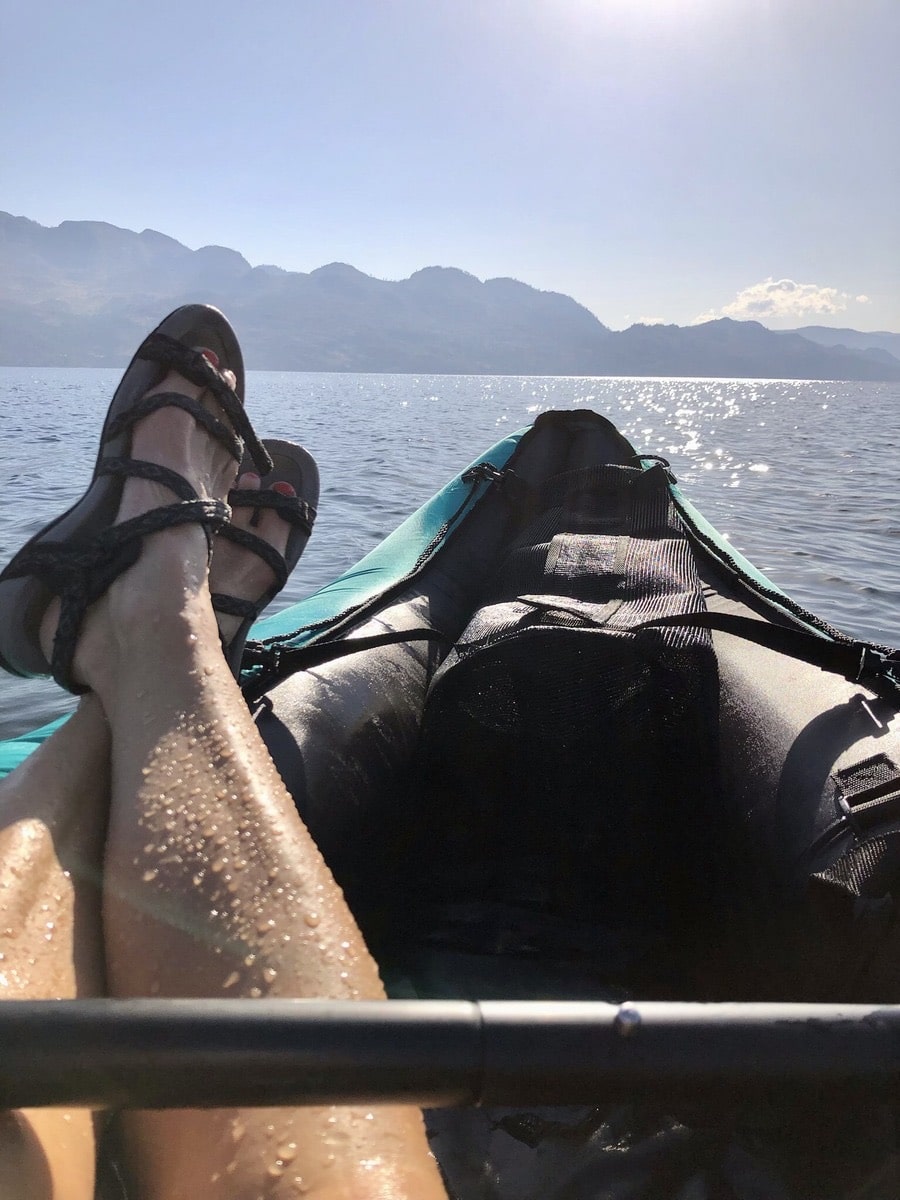
Relaxing on a kayak on Lake Okanagan. Photo by BJ Oudman
Technological Advancements in Drop-Stitch Construction
The primary factor driving the resurgence of travel kayaking is the widespread adoption of drop-stitch technology. This construction method connects the kayak’s top and bottom layers with thousands of fine polyester threads. When the chamber inflates to high pressure, these threads go taut, forming a remarkably flat, rigid structure. Standard inflatable boats often bend or sag under weight, but drop-stitch models maintain their shape efficiently.
Travelers should look for vessels that inflate to pressures between 10 and 15 PSI to ensure optimal performance. Higher pressure results in less drag and better speed on the water. Additionally, this rigidity allows paddlers to cover longer distances with less physical exertion compared to low-pressure models. Manufacturers now frequently combine this technology with reinforced PVC layers to withstand abrasion from rocks and sand.
Comparing Hull Designs for Global Travel
Not all portable kayaks serve the same purpose or perform well in every environment. Some designs prioritize stability and width, making them ideal for photography or leisurely paddling on calm rivers; conversely, narrower hulls with sharp entry lines cut through choppy water more effectively and suit coastal expeditions. Therefore, understanding the primary use case is vital before packing gear for a trip.
Logistics of Air Travel with Paddling Gear
Flying with a full-sized kayak requires strategic planning regarding airline baggage policies. Most international carriers set a standard checked-bag weight limit of approximately 23 kilograms (50 pounds). Fortunately, many modern performance kayaks weigh between 12 and 18 kilograms, leaving sufficient room for a collapsible paddle and a personal flotation device. Travelers must weigh their packed bags at home to avoid unexpected fees at the check-in counter.
Adequate packing involves more than simply rolling the boat into its designated backpack. Placing sensitive components, such as skegs and valves, in the center of the roll provides them with extra protection during transit. Furthermore, using clothing or wetsuits as padding along the edges of the bag adds a layer of protection against rough handling by baggage handlers. This dual-purpose packing strategy saves space while securing the equipment.
Photo provided by Visit Penticton.
Maintenance and Drying Protocols on the Road
Maintaining equipment while traveling prevents damage and ensures that the gear remains within weight limits. Fabric absorbs water, and a wet kayak can weigh significantly more than a dry one. Therefore, travelers should carry a dedicated microfiber towel to dry the hull manually before packing it away. If immediate drying is impossible, unrolling the boat at the hotel or accommodation later that day is necessary to prevent mold growth.
Environmental Stewardship and Biosecurity
Bringing a personal vessel into new waterways carries a significant responsibility regarding environmental protection. Invasive aquatic species can easily hide in damp crevices or attach to the hull material. Transporting these organisms between different bodies of water threatens local ecosystems and biodiversity. Consequently, many regions, such as New Zealand and parts of the Pacific Northwest, enforce strict biosecurity inspections for all watercraft.
Implementing the Check Clean Dry Method
Responsible adventurers adhere strictly to the Check, Clean, Dry protocol before moving to a new location. This process involves inspecting every inch of the equipment for organic matter or debris. Afterward, washing the boat with fresh water helps remove invisible organisms or saltwater residue. Finally, allowing the gear to dry completely for at least 48 hours is the most effective way to neutralize potential biological threats.
Curating a Unique Aquatic Itinerary
The true value of a portable kayak lies in the freedom to explore areas that lack commercial infrastructure. For example, the canals of Venice offer a completely different atmosphere when navigated silently at dawn away from the main tourist gondola routes. Similarly, the fjords of Norway or the limestone karsts of Southeast Asia reveal hidden coves that large tour boats cannot enter. Extensive research using satellite maps helps identify safe launch points and potential hazards before arrival.
Safety remains the paramount concern when paddling in unfamiliar waters without a guide. Understanding local tides, currents, and weather patterns is mandatory for any independent excursion. Additionally, wearing a life jacket is non-negotiable regardless of swimming ability or water depth. By combining preparation with high-quality equipment, travelers can safely unlock a world of hidden waterways.
Conclusion
Portable kayaking opens a world that most travelers never see—quiet inlets, hidden coves, winding rivers, and protected waterways far beyond the reach of tour groups or crowded docks. With the right gear and a thoughtful approach to safety, maintenance, and environmental stewardship, you gain the freedom to explore the planet from an entirely new perspective. If you’re ready to discover more ways to adventure independently and unlock nature’s secret places, explore our latest outdoor travel guides on Wander With Wonder and start planning your next unforgettable journey.
.
The post Portable Kayaking Adventures: A Traveler’s Guide to Inflatable Kayaks appeared first on Wander With Wonder.